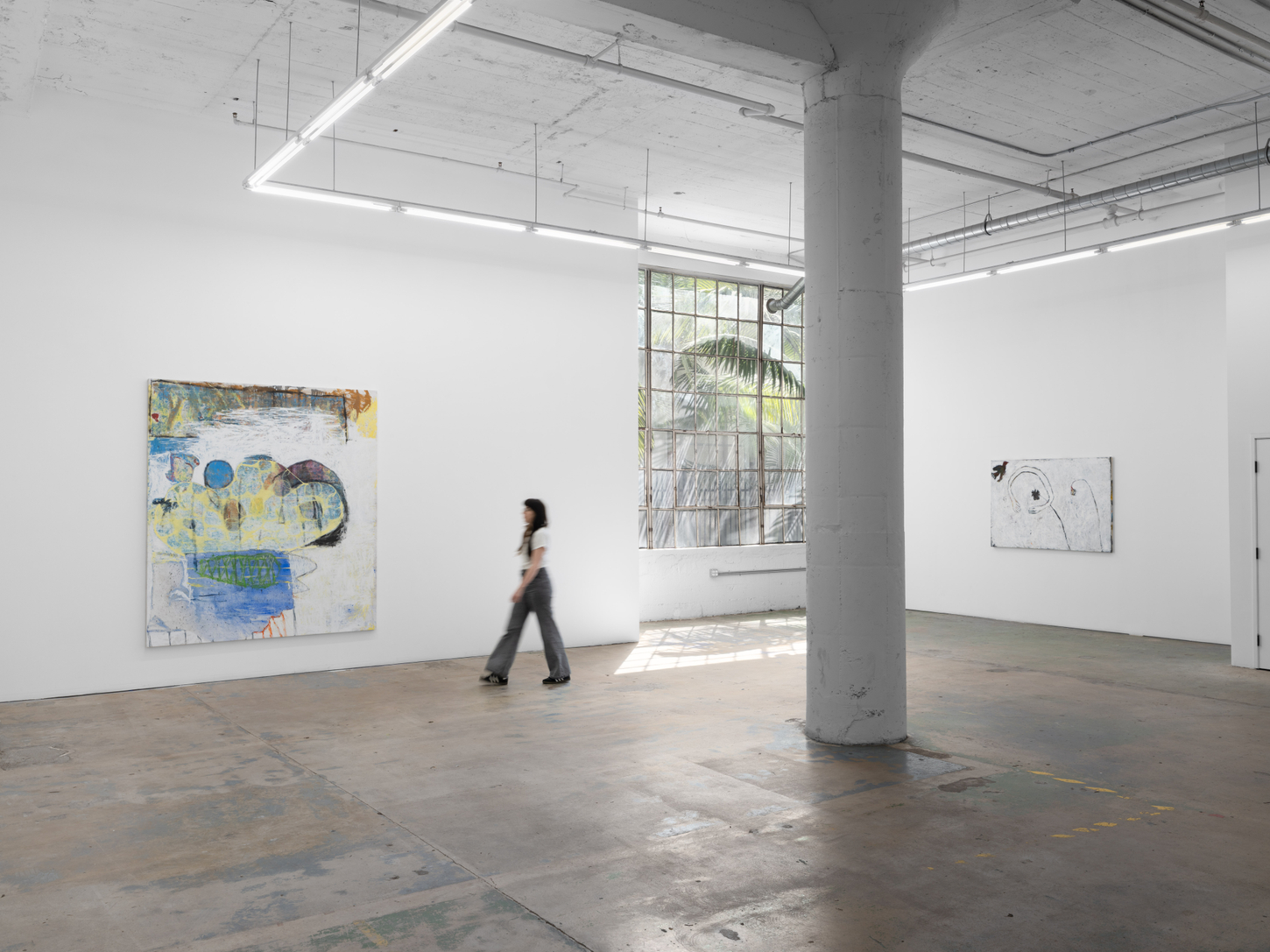
Just before shipping the work to Los Angeles for All top teeth knocked out at once, which opened at Nicodim Gallery on March 28, Laura Owens stopped by for a studio visit here in Houston, where I’m a fellow at the MFAH Core Program. Our time was short, but I’ve thought about it often since. Her words landed like clues to questions that hadn’t fully formed, ones that only surfaced after I’d decided the show was done. This seems to happen at the end of every project, there’s no real conclusion, just a doorway into the next set of questions. The paintings now on view through May 16, were made individually but simultaneously. In their absence, I can see how interconnected they were, how much they belong to each other, and how much their making was shaped by the space where they were made.I’ve long admired Laura’s work, especially how she thinks about a painting’s relationship to the space it inhabits. What follows is a conversation with Laura, one of the few people who saw the paintings before they left the studio; the questions she helped form, about what a painting carries as it moves through the world.
– June Canedo de Souza
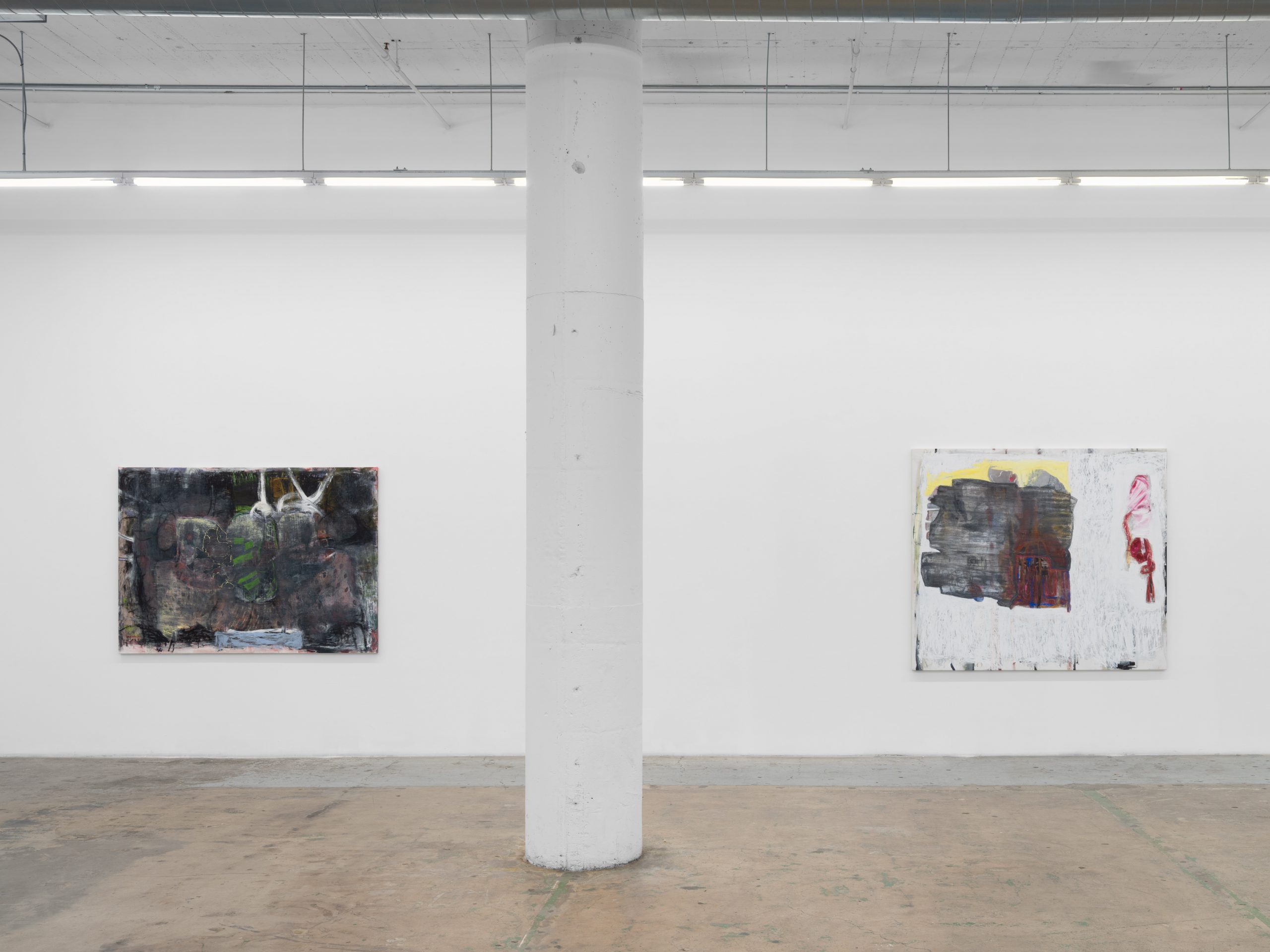
June: When you came into my studio earlier this year and there were these two smaller paintings, I don’t know if you remember, but I was telling you I didn’t feel like I’d earned them yet, that they still felt unresolved because I hadn’t labored over them like I had some of the other ones. And you talked about how important it is to let paintings exist in that state, to show process, to let the unresolved sit alongside the resolved. And so much of what I want to ask you is about that because as I kept looking through your archive over the last few days the in-between kept coming up, which is the language that you used when we were talking about these works. So I wanted to ask what you think a painting is doing when its finished state is in that in-between space? You also said that “in-between” is a space that takes a long time to arrive at. Why do you think that is?
Laura: I remember thinking that when I saw your work. It was really great how you were able to stop without overtelling the story or using graphic means to make everything feel complete and fully determined. I imagine that’s what I meant by an in-between state where the potential is still there, and the viewer has more to chew on in terms of: What are these forms? And how do they emerge from the paint? What are they representing? What is the scale?
It’s interesting because in the studio the paintings were essentially on top of each other which started to feel like a generative space for me to think, how one painting continues onto the next one. But in the gallery space, they are all so spread apart, there is so much breathing room in between them. I kept hearing people single out a painting they had a strong connection to, which that system is sort of set up for. Saying things like, “but this one, this one is my favorite” and almost ignoring the rest.
It’s really hard for me to divorce any one painting from the whole. That’s kind of what painting is to me. It’s about that experimentation. I’m thinking about where the painting is, and when the painting is, and how it becomes an artwork versus, like, in your studio when it’s not an artwork, when it’s still being formed. But I get the idea that if you see the painting in your mind, and it arrives in your studio, as in it comes to fruition, or you do something specific with it, and then it changes once you get it into another space, you realize it’s sort of demanding something that you hadn’t expected.
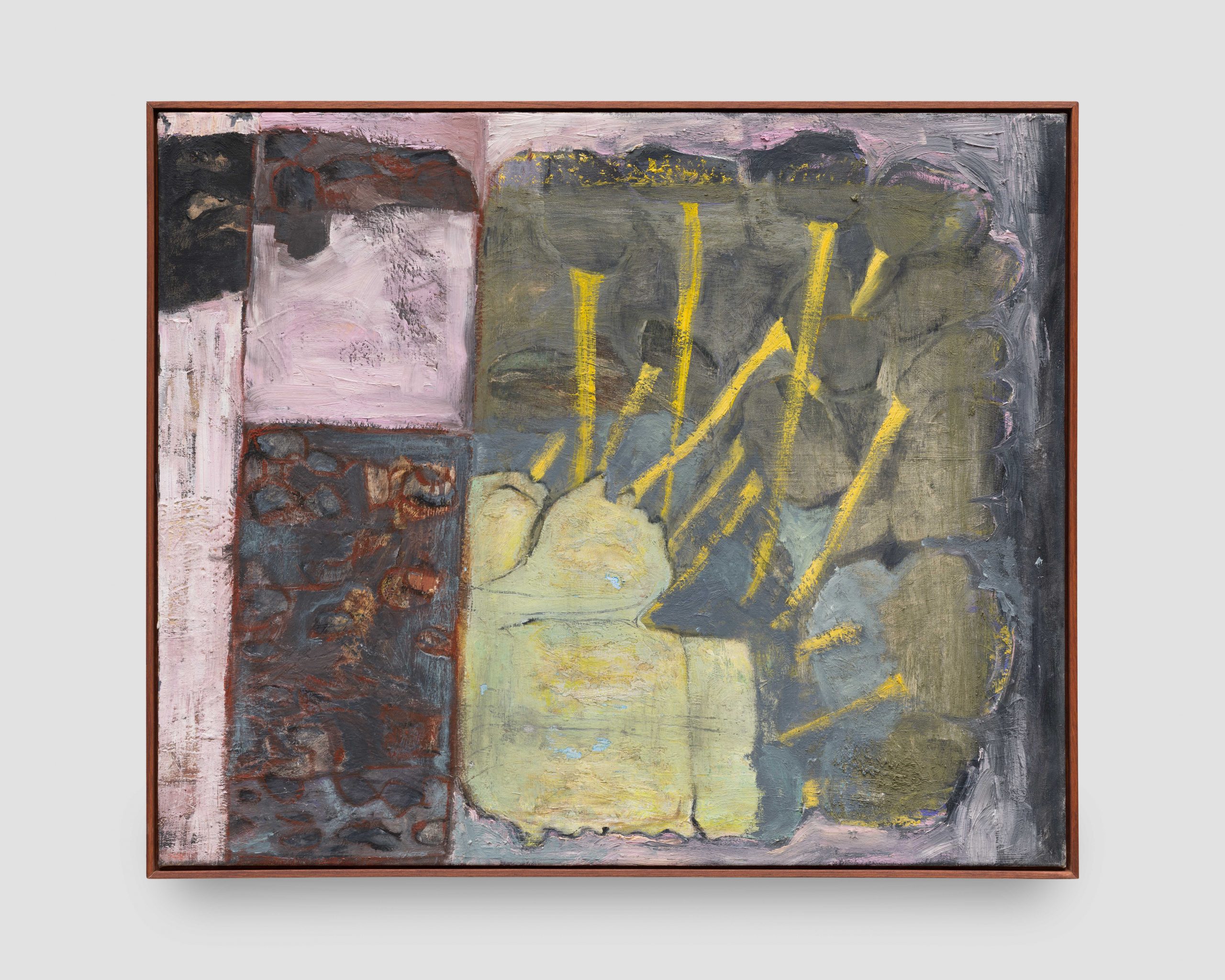
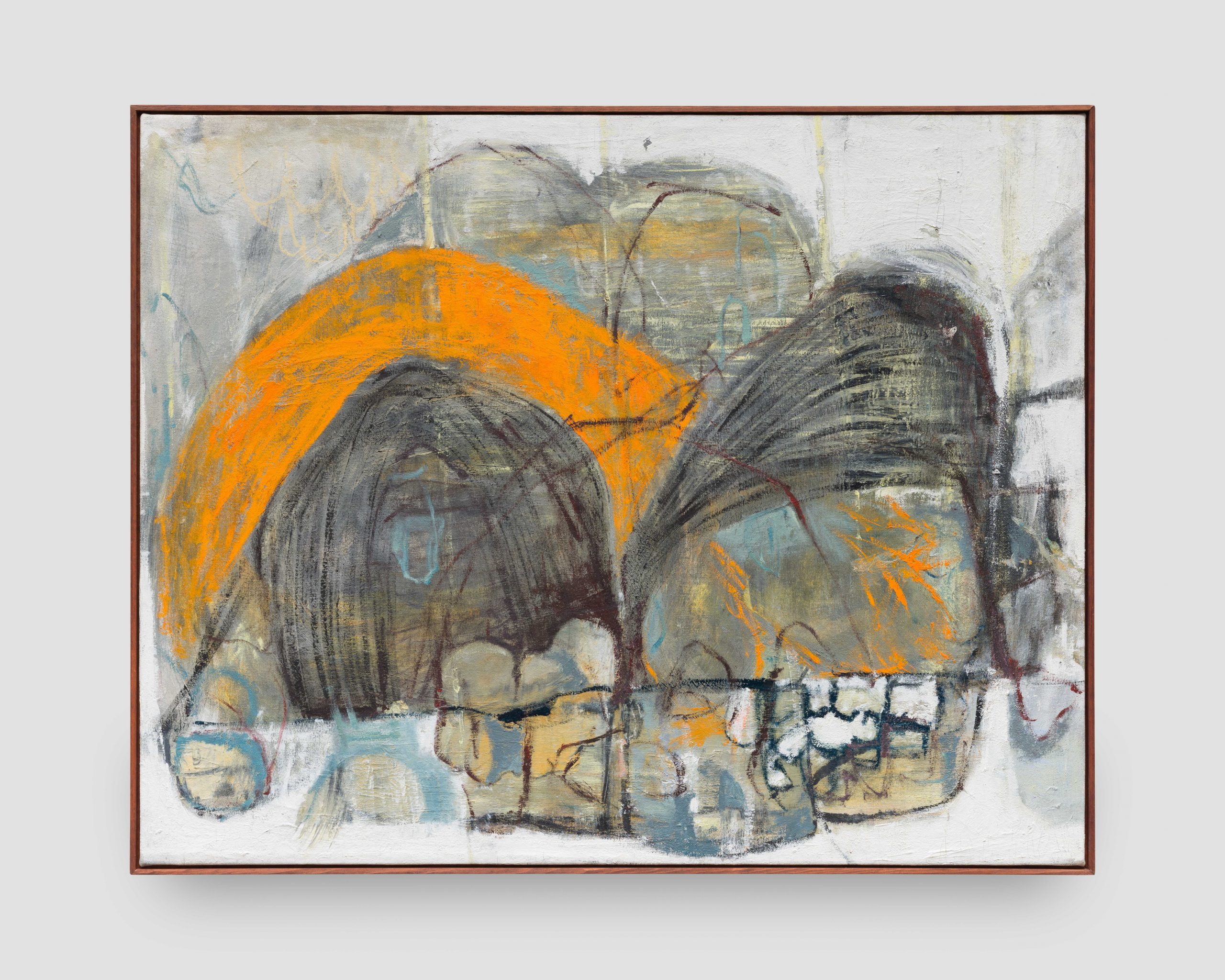
There’s a caption in why11, something like ‘more humans used this space before a painting walked in and made it an art space ok?’, after hearing that I couldn’t stop picturing your paintings literally having legs, choosing where to stand, deciding for themselves where they belong. That led me to think about the actual space between paintings, those gaps, even tiny ones sometimes. Especially the nine paintings in oil from 2011, the blue and red series, or the twelve in Los Angeles. You mentioned somewhere about hanging them ‘closely enough that it’s impossible to see one at a time,’ and that phrase really opened something up for me. So I want to ask about the camouflage of it all, the camouflage in the making, are you working on them simultaneously, moving between them? And when it comes to showing them, how does the gap between the canvases affect how you read the marks and gestures on each one individually?
Camouflaging one thing for another, or…?
Yeah, because sometimes the lines, for example, in Los Angeles, I think the 12 paintings. It kind of feels like there is a break in between them, but it’s not a break. I didn’t see it in person also, but those breaks between the paintings are part of the architecture and not the painting, but it then becomes part of the painting.
I don’t think anyone was truly fooled, but when you first walked in, it had a seamlessness that made you feel like you were in a really particular space, you know.
It’s also just more experience with understanding what the viewer’s capacity is for taking in new information. There’s a threshold. In my early exhibitions, I had a lot of information packed into each painting, and somehow I realized that I needed to maybe not have so many ideas per exhibition. Do you know what I mean? Because it can sometimes just be confusing and competitive—competing ideas and modes of making a painting. But I don’t know if I would say that about your work. In your work, it feels like things are emerging out of the paint. When I saw the paintings in your studio, I felt like they were definitely different paintings, like, they’re made in different ways. But it also felt as though there was a similar ethic in all the paintings in terms of how you make a painting.
That’s the experience that I’ve had in sending off this work and seeing it installed in this space, which is a massive gallery, where there’s so much room in between each piece. I am viewing them very differently now that they are there and thinking about how it changes the painting from where it was made. I didn’t even realize how interconnected they were when they were in here. And so this is my first experience in questioning that full spatial potential in relation to my paintings because they’ve transformed from being in the studio where they were talking to one another, to being very singular works, like their own little portals.
For the last decade or so, maybe even longer, I have been planning out each exhibition as one thing. I am working in tandem with the architecture. I usually do a site visit, and I’m thinking about how the work will be shown in the space. Before that, in the 90s or early 2000s, I made work that… you know, you would look at the work, and then, when you moved into the second room of the gallery, after turning your whole body, there would be another work with some kind of memory of a painting you had just seen, a reference to it. So coming out of that, out of making sculpture in graduate school, and thinking about the body walking around a space, the walls became part of the work. Or I thought of the wall as just an extension of the work. Have you started to think about these things in terms of installation? What a painting needs?
For this show I was definitely more focused on what I needed from the paintings, so they became this sort of vehicle for trying to understand the last few years. Being in the core program now, having this studio at the museum, this is the first studio I’ve ever had. I’ve done residencies and made work where I could living in New York, but I’ve never had a dedicated work space for a long period of time so when I got in here I just couldn’t stop working, and because this is also the first space I’ve had to myself since having a baby, it became a space where I was processing all of the changes so painting was kind of like therapy. People keep saying they are emotional, so I guess that might be why. But once you get it out of your system, there’s more room now that the paintings are gone and living somewhere else, to reflect on what they will need moving forward. To make other considerations that, as you say, are an extension of the painting.
Did you notice that your materials changed when you got a studio versus working at home or being at a residency like Skowhegan? Or did your materials stay the same?
The materials stayed the same, but the tools changed. I’ve also had more time to wander around the hardware store and get different tools to paint with. I’m painting with scrapers and steel brushes and using sanders to create contrast, and whatever sharp thing I can get my hands on. Sometimes I’ll create holes from how much sanding I’ve done on the canvas, trying my hardest to erase a mark, and now that unpredictable process of creating a hole on accident for example has become part of the painting in unexpected ways that I didn’t think I’d allow myself to do before because there are all these questions about value.
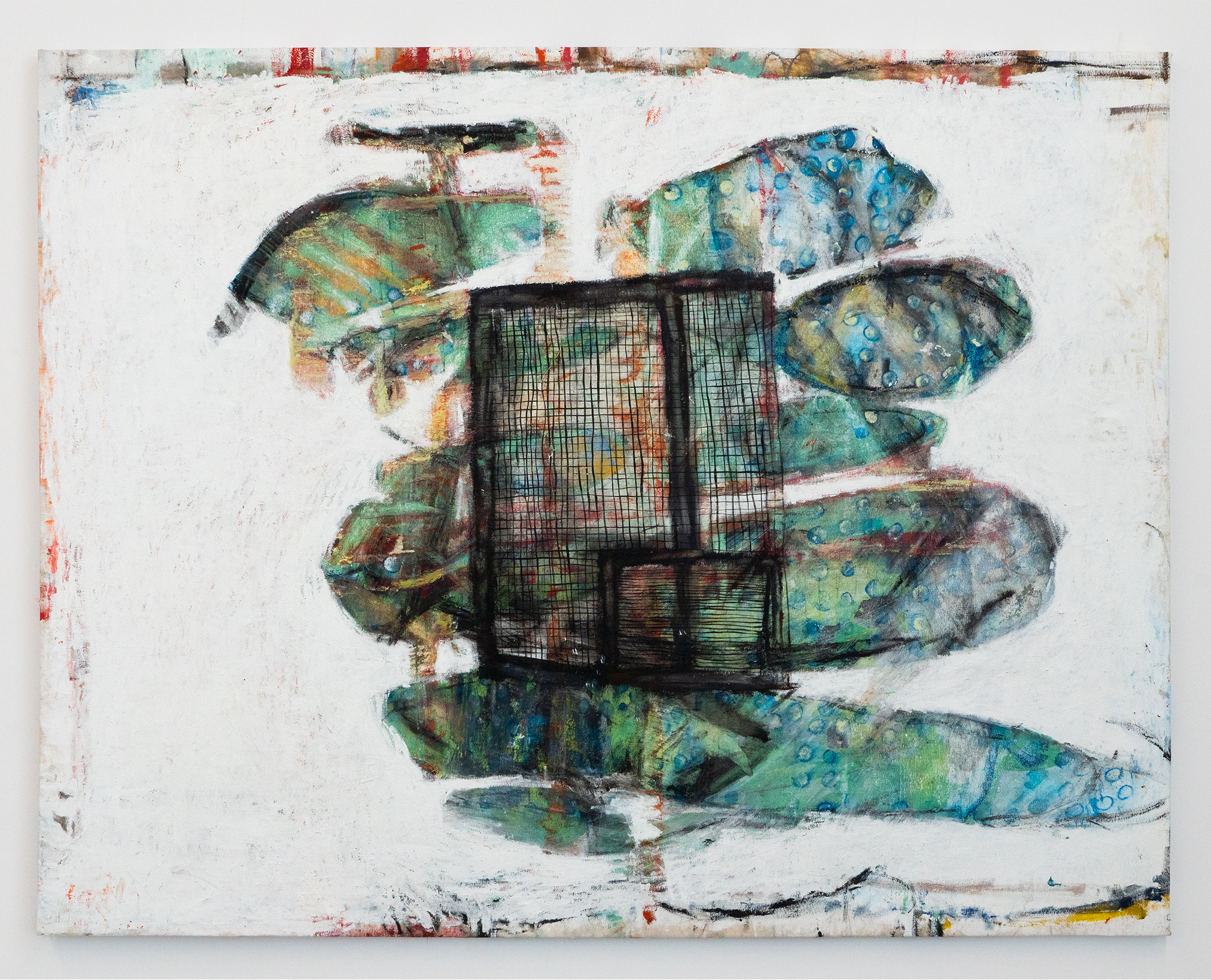
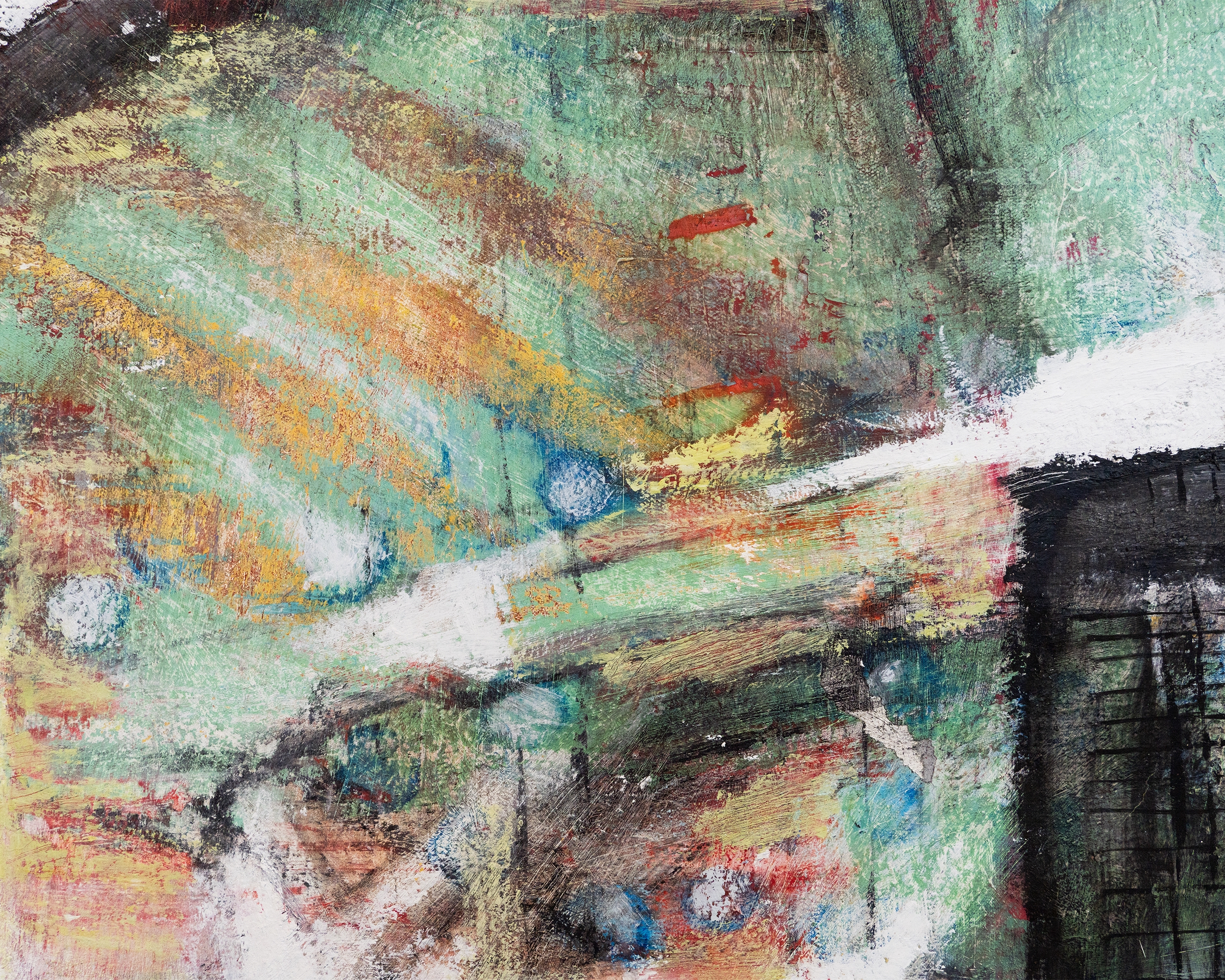
Yeah, I’ve had a lot of holes. I mean, I was often using portrait linen, which is really thin, and stretching it a little too tight, or sanding it down. I remember patching a few holes with linen on the back, glued on the back with matte medium, and being, like, it’s fine, it’ll be fine.
It’s fine! I mean, it’s also a class thing, you know, I’m not one to tear up a painting and then go buy some more canvas because there’s a tiny hole in it. I’m definitely going to stick it out, struggle through the mistakes, until I’ve made the painting.
But how do you get started? How does your process start?
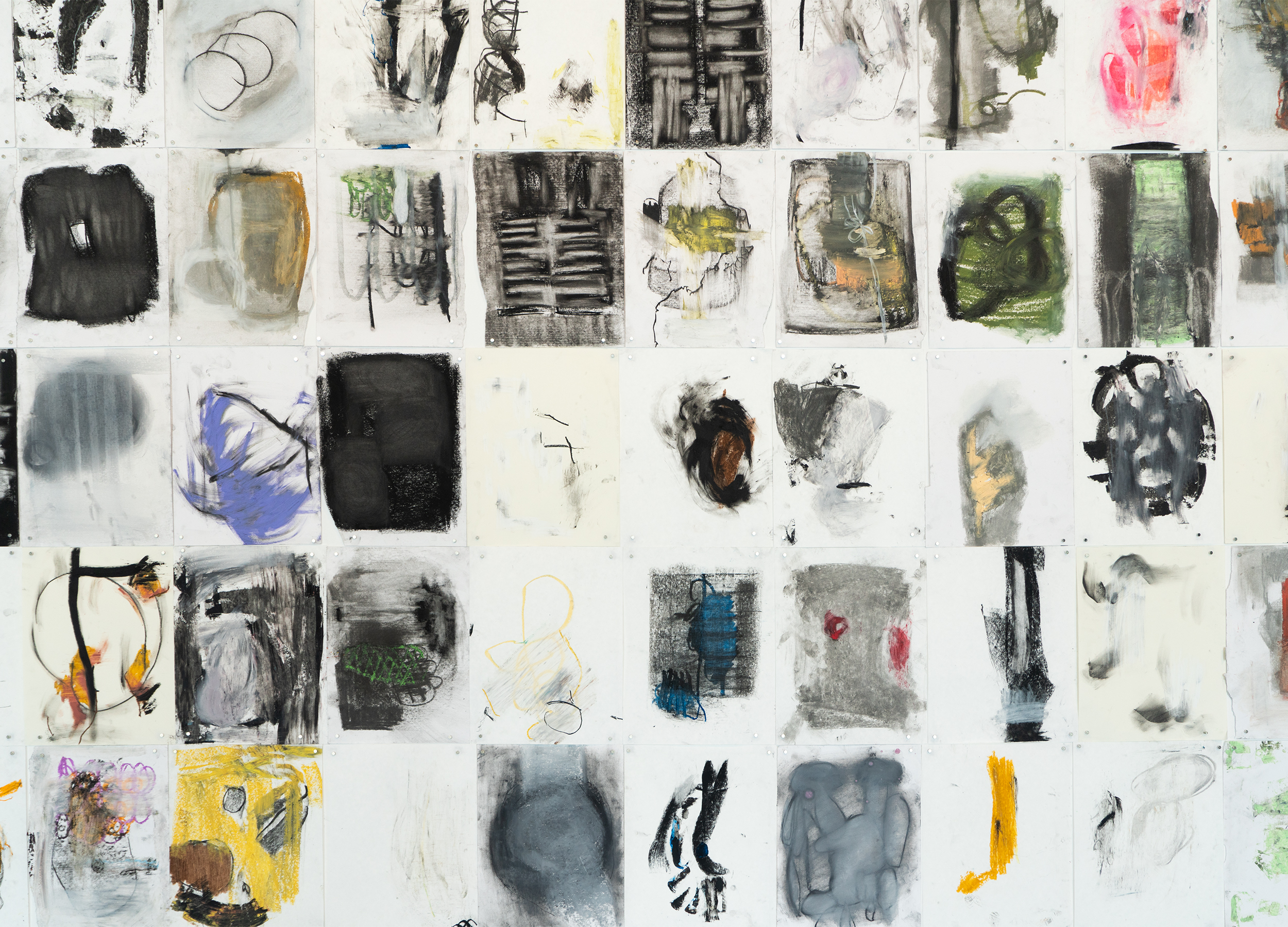
My drawing practice is really consistent, one to two minute drawings that work like writing. Well that’s how I write anyway, in endless sentences where the last few weeks or months of seeing and looking and reading sort of pour out onto the page, and I draw the same way. Whatever I’m looking at or researching finds its way into the drawings. Over time, this builds into hundreds of drawings and I start a painting from those drawings. Translation or trying to carry marks from charcoal on paper over into oil on canvas. But translation can be subjective, and sometimes impossible. A charcoal mark and an oil mark are different things, so the painting has to find its own path, and eventually separate itself from the drawing it came from.
There was a moment in your Rice lecture from earlier this year that really stayed with me. You’d just walked us through this whole arc, paintings expanding into installations, full spatial takeovers, the books, the desks, all of those participatory elements, and after witnessing this enormous body of work, all that pushing of what a painting could be, you just said something like, But I’m not doing that anymore. I’m tired. And I found that so honest and so interesting because it wasn’t defeat, it felt more like you’d followed the work as far as it needed to go in that direction and now something else was calling. So I want to ask, what is that something else? Or is there a something else?
I don’t know. I’m just trying to break habits that I have developed over the last few years.
Ooh, what are some of those habits?
Oh, they’re pretty hard to describe. I mean, I guess, like, certain colors, or, you know, certain compositions, and just noticing how I’ve habitually done things a certain way, in terms of layer order, or, like, how I start a work, or how I finish a painting, or the scale of my work. You know, whatever you’ve been doing, it’s just sort of like, okay, don’t do that anymore. What if you did the opposite or you allow, or force yourself to start with something that isn’t familiar or necessarily your thing.
Laura Owens (b. 1970, Euclid, OH) lives and works in Los Angeles, CA. One of the most celebrated painters of her generation, Owens has continually pushed the boundaries of what painting is, or can be. From the outset, her works were marked by an irreverent embrace of multifarious sources and references – embroidery, textiles, texts, and decorative patterns. Ranging in scale and technique, her works have continued to veer between, and fuse, the languages of abstraction, decoration and figuration.
Owens has exhibited extensively, including a mid-career survey at the Whitney Museum of American Art, New York (2017), and, most recently, a solo exhibition at Matthew Marks Gallery, New York (2025), where her work continues to explore and expand on site-specific immersive painting installations. Owens studied at California Institute of the Arts, Valencia, CA, Skowhegan School of Painting and Sculpture, Skowhegan, ME (both in 1994), and Rhode Island School of Design, Providence, RI (1992).