Palettes of History with Jenny Stanjeski
Jenny Stanjeski has devoted three decades to the beauty and craft of illusions. A union scenic charge by thirty, she has painted Broadway and Off-Broadway sets, reproduced Picasso paintings with actresses’ faces swapped in, and now leads the Professional Apprentice Program in scenic art at The Juilliard School. Outside the theater she is an accomplished painter, a performance artist, a cabaret singer, and a longtime collaborator with interior designers across New York. She sat down with designer Chelsey Mitchell in her studio at Lincoln Center, around a table that used to be a bathtub.
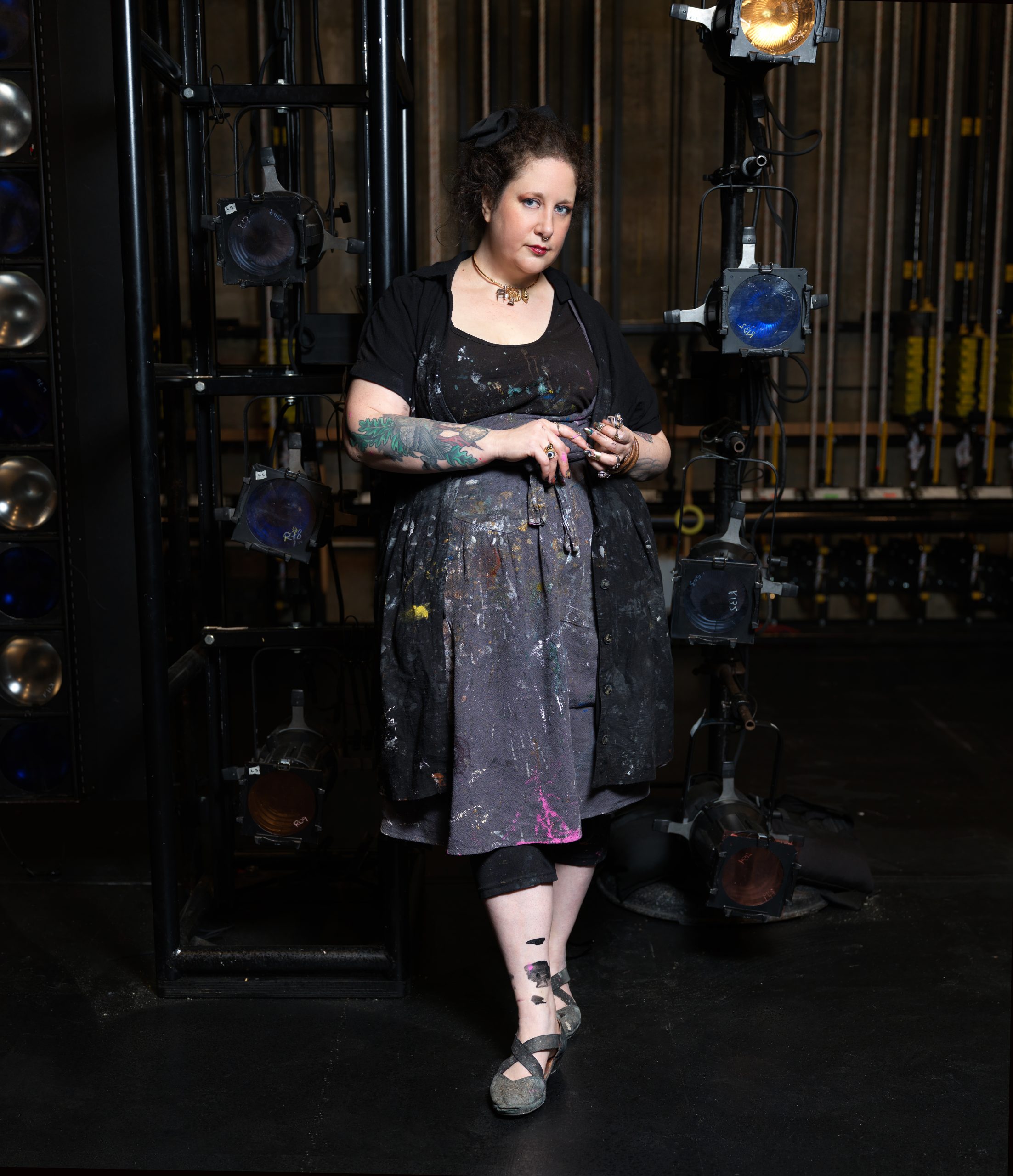
I know you were trained in historical and classical painting. How did you get here?
I’m so thrilled that I’m a monster of my own making. Like every girl, I started in ballet class. I was super bad at it; I didn’t know I was hypermobile. Then piano—again, hypermobile. Then, finally, art class.
I grew up on a shop floor. My father owned a marine business fixing boats, and I grew up holding his flashlight. I knew how to use tools. By the time I started doing community theater at thirteen, I was already a stringent purist: don’t use white or black in your watercolors. Mix black with alizarin crimson and phthalo blue, because it should have depth. For white, preserve the white of the paper. You don’t need to stick to that—there are lots of reasons not to—but if you learn classically, you can break the rules. Then I’m doing technical theater painting, trying to make those same colors out of throwaway Home Depot paint.
Were you drawn to theater specifically, or was it a place to express this interest in painting?
The first time I walked into a community theater, it was because friends of mine knew someone in a show who needed people to paint the set. We each got a tire to paint. I painted my tire, cleaned my brush, and went to the set designer: “What’s next?” After I finished that, I asked, “What’s next?” Everyone else was still on their tires because they were socializing, which is fine, it’s community theater. So the scenic designer took me under her wing, and I spent the summer careening around with her in her green Corvette. My father was like, “Well, that’s a bunch of weirdos and gays, but I guess you can hang out.”
In high school I changed painting teachers and moved into oils. I painted a lot from fashion magazines—a lot of W, a lot of Bazaar; we’re talking the ’90s—and from photography books like the catalogue for the 1955 MoMA exhibition The Family of Man. Meanwhile I’m learning set painting, stage management, lighting, all the different parts of theater, and performing too. Then I got into Arts High School—two days a week taking classes at the college. I sought that out myself, though my parents were very supportive.
My father was very enamored of the idea of me being a fine artist. But I knew I was making more money painting scenery, and I come from a blue-collar background. I knew I needed to make a buck. About five years ago my father said, “We thought we were going to have to support you.” Could you have told me that? The plan was to do theater and make art on the side after attending Carnegie Mellon.
How did you come to teach? Your academic approach includes a number of older techniques—how did your interest in those start?
It’s about wanting to know the etymology of something. I have books on art reproduction and art restoration. I read up on old pigments, old methods, how paint was made and why that changed, when more people started painting and with what tools. A painter or a tradesman can say things about painting that an art historian or critic cannot, because we’re doing it. In his book Secret Knowledge: Rediscovering the Lost Techniques of the Old Masters (2001), David Hockney documents how he and his assistant pasted up pictures of paintings and realized optics were being used earlier than historians said. They could tell because the vanishing point on a rug was here, the one on the tablecloth was there, the chandelier’s somewhere else; the painters weren’t using a one-point perspective, they were refocusing. Nobody believed him. He was finally proven right. That book meant so much to me because it showed that using these tools is hard. It’s not cheating. They don’t do the work for you. Using tools doesn’t mean you’re not an artist.
The way things were done historically is what we build on. If you know how it was done, you can decide to change it or improve on it. If you don’t, you might not be able to figure some things out. I keep teaching the old methods because they create a basis for understanding the artwork, and there is so much art history in theater. Designers will say: give me Constable skies, give me Turner’s waves. One reason I have good relationships with designers is that my language can move between fine art and theater.
Once I ran into a director who said, “We needed your conjuring for this one.” To me, that’s what we’re doing: opening the historic boxes to let the bats out, so they can come visit and tell us what we can bring forth in a new way. You cannot be completely original and, honestly, trying is a waste of time and a waste of our love of things. Find the things you love, then turn them into new things you love.
A significant part of the work we’ve done together is hyper-realistic faux finishing, and your technical ability is startling. How did you get into it? It feels related to but still distinct from your other work.
I owe a lot of my most accurate faux finishes to studying other faux finishers’ books—Professional Painted Finishes, Pierre Finkelstein’s—people who took the time to break down the steps. But I’ve had to redesign all of it in water-based media, because of the constraints on sets and because of what I’ll allow my painters to be exposed to. I keep a green shop. I don’t like bringing chemicals into people’s homes. The only solvent you’ll usually see me with is denatured alcohol.
“I drew every mark on that wall; I was smoke; I was heat lifting the air.”
When you’ve done three hundred wood grains—some a hero prop desk that has to look super good, some just something general that feels warm—you learn what reads where. Wood has sap and crystalline structures that reflect light, so I put some gold behind my graining to get that. But was I painting it to look right for someone on the ground, someone standing, or someone up a ladder? I chose standing, at my height. So when I went up the ladder, I couldn’t match what was in front of my face. I’d climb down, look, go back up, and paint.
In theater you practice looking from the audience’s point of view: what can be seen, what can’t. I’m always trying to nail a sense of authenticity. What is this missing? Why does it look dull, or fake? It doesn’t need to look like wood. It just needs to not say “fake wood.”
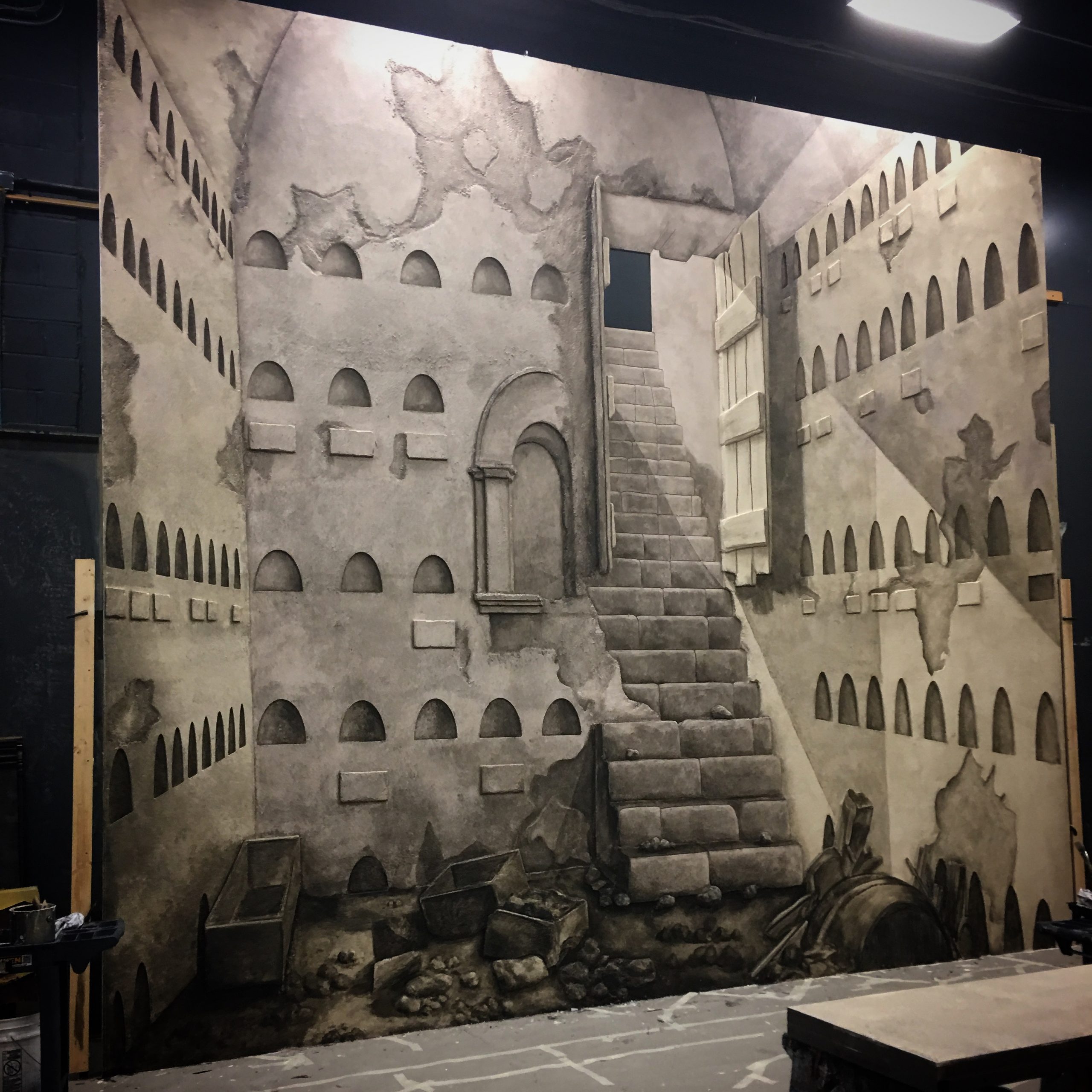
We talk about the Italian designer and architect Lorenzo Mongiardino a lot. Faux finishing was a core part of his work and you’re seeing these rooms done in the 1970s and ’80s, but the aesthetic is very much eighteenth century. It doesn’t look fake, but you kind of know all the finishing is fake, and that’s part of it.
Yes. When you paint a portrait at exactly human size, it doesn’t work; that uncanny valley thing happens. With faux, you either have to get it dead-on or you have to make choices about color and composition. Everything is its own little painting. Every set, every piece, I have to look at compositionally. It needs to have flow.
When the Willem de Kooning show was at MoMA, I could only get halfway through before I was exhausted, because the way I learn a painting is by standing in front of it imagining the choreography and feeling it in my body, in his body. In front of a painting, I’m imagining what the artist was doing with their body, how they made those marks, what the energy was. You can see how they were feeling. Dragging a brush until the ferrule hits the canvas, wiping a brush across it, tapping it—those are all different moods. Georges Seurat placing those dots is like an optometrist going one or two, one or two, until they find the right prescription.
As a teenager I got really into Karin Davie’s paintings; they were in a lot of fashion magazines. Then, out of the blue, she called me to help with a project—she’d gotten my name from someone—and said, “You don’t know who I am.” I said, “Yes, I do, and you just had a monograph published; I just saw it at the Strand, it’s gorgeous.” The next day I’m in the studio of the only artist I’d been saving clippings on helping put Mylar on aluminum flashing for a big sculpture. Her paintings are all swirls, all about the choreography of the body in front of the canvas.
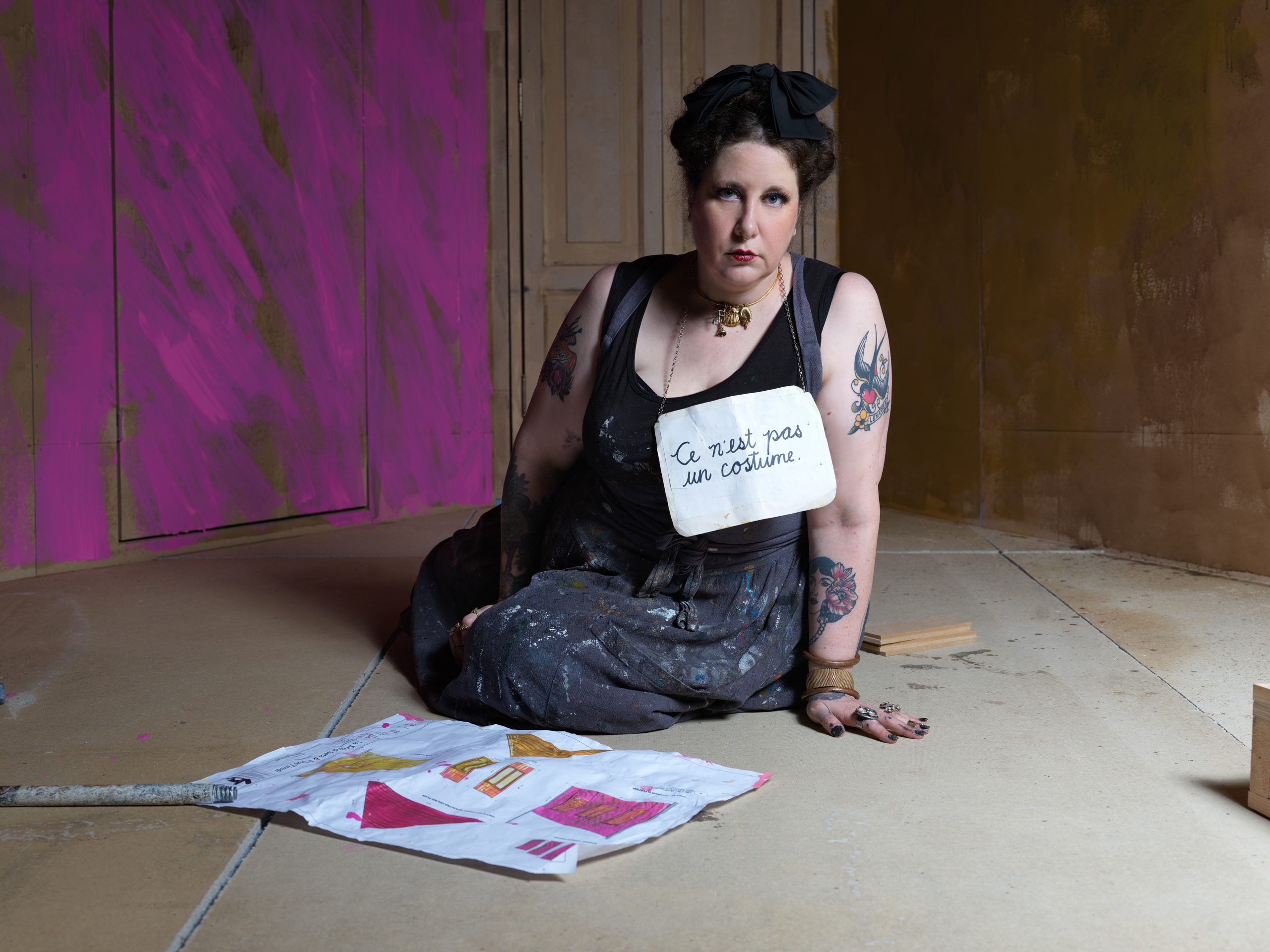
I ended up assisting her for years, because I was good with materials. And I saw how the art world worked and I said, “No thank you.” I am blessed to have been able to say that. Will I end up there anyway? Who knows. It’s nothing I’m going for.
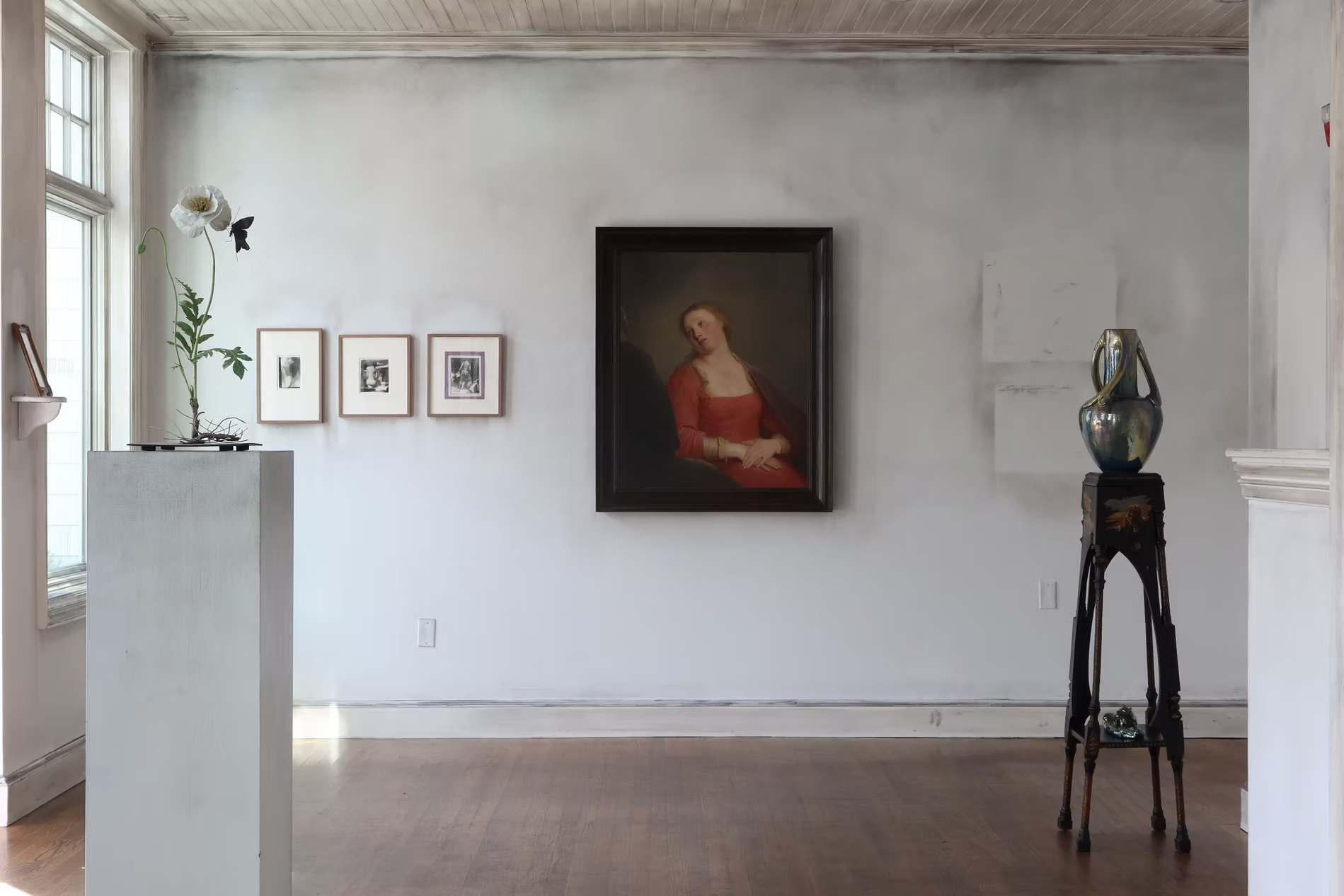
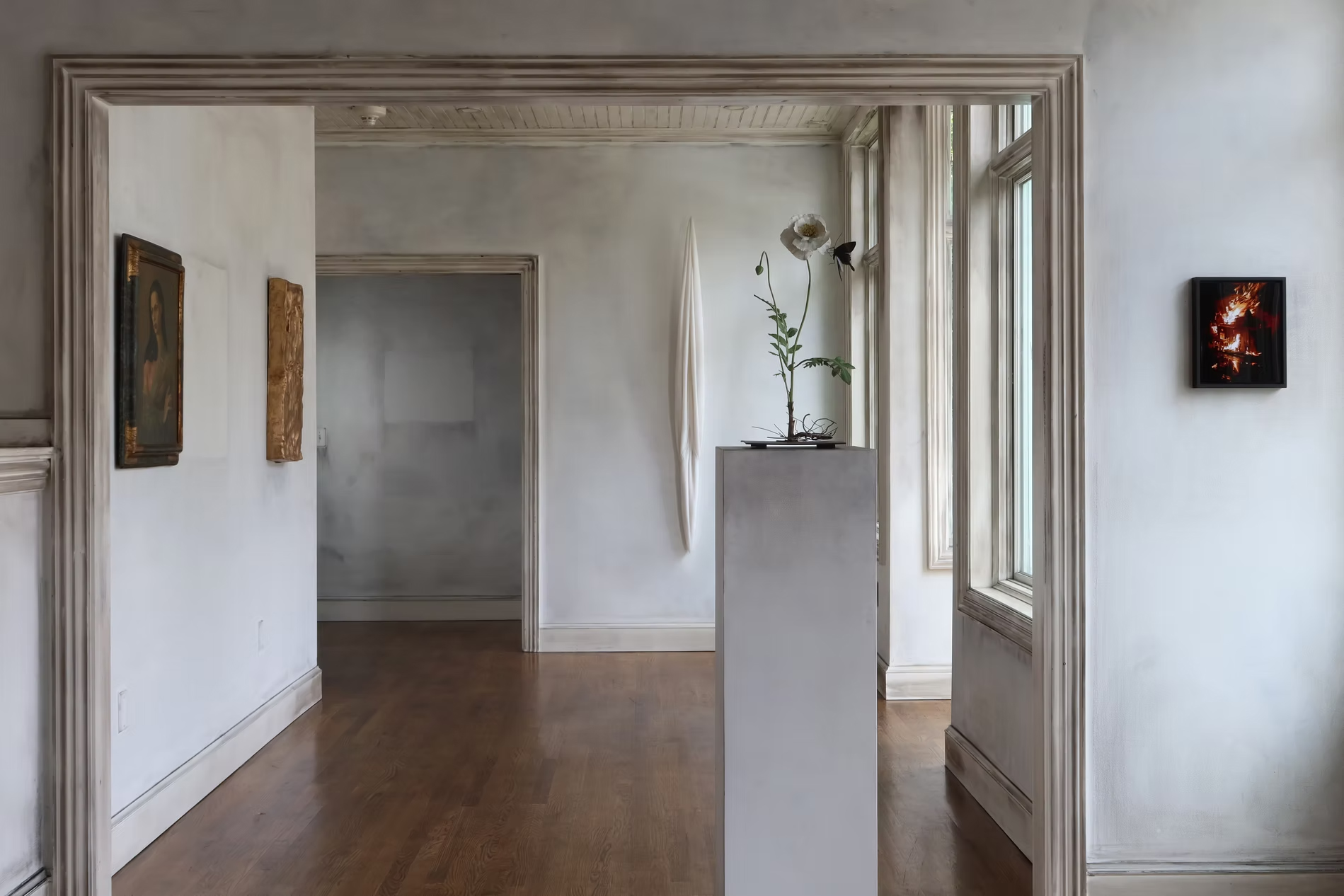
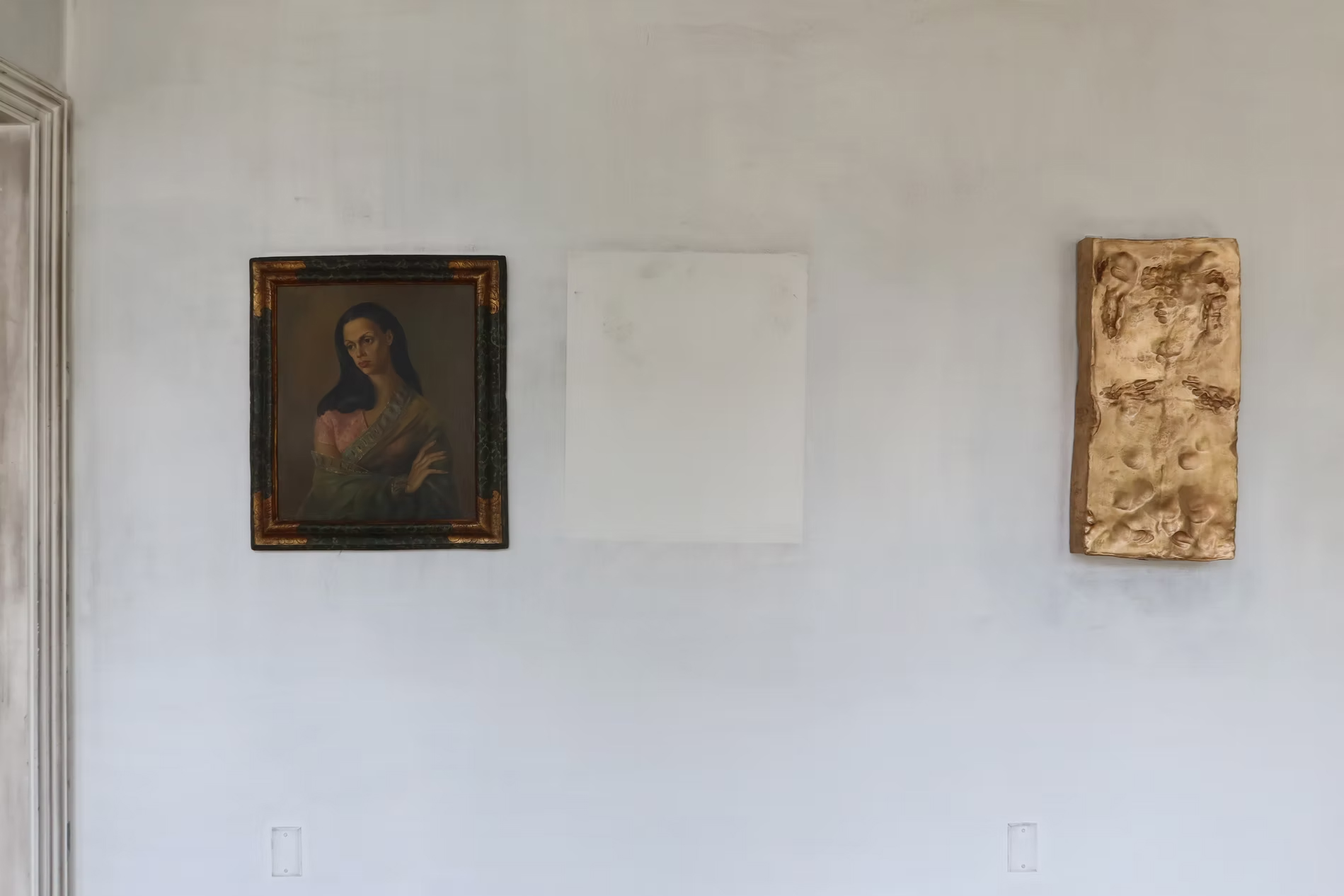
I think one reason you find so much joy in scenic painting is that you bring a personal element into the work. Widow’s Walk, the show we did on Martha’s Vineyard, where we smoked out the interior of the gallery to recreate the aftermath of a fire, is a great example. I loved the providential meeting of our concept with your personal history. Tell me about that.
That was amazing. It was twenty years, almost to the year, since I went through a fire. I came back into the building and documented what the fire had done to the architecture, and honestly, I loved what was left behind. I was obsessed with it. The changes I went through during that hard time were very meaningful to me, and they got me back out into the city more.
I had actual charcoal from the windowsills of the apartment where the fire started. I’d been using it for spells and things, but never in an artwork. You gave me a reason to pull it out, and that charcoal ended up on the walls of that gallery.
Do you think that’s why it looked so realistic? You could feel it in the space, but it didn’t look expressive.
I think it’s a combination of being as precious as I could in the cramped time we had—thinking about how the smoke would billow here, what would happen right there—and that it was a love letter to what I learned from observing that building, to that time in my life, and to ephemerality. And to have historic works sitting inside that ephemerality was delicious. While I was making that show, I could go into that quiet creative place you go when you’re just making. I drew every mark on that wall; I was smoke; I was heat lifting the air, a ledge that caught more as things fell. I was acting as a room to see what would happen—back to the choreography of the air and the smoke this time.
Your practice moves across a broad range of disciplines. What’s the unifying thread in your approach?
The first thing that comes to mind is a line from the Waitresses’ song “They’re All Out of Liquor, Let’s Find Another Party,” about people who can’t sleep until the color is just right. That’s not really an answer, but it’s what popped into my head.
I think the thread is a desire to create little worlds, little environments. I do try to force my taste onto everything a little, because I think I have good taste, but I also want to serve the pure ideas of the designers I work with. I want to really get them, and then delight them.
I’m not trying to design it for them; I’m trying to help them maximize where I think they’re going within the wonderful constraints of whatever we’re working on—the director, the costumes, the home, the reproduction. That means the material is important, the reflectivity is important, the provenance might be important.
It’s all relative. Every kitchen and bathroom is getting redone when a client moves in, but compared to theater, yes, it’s more permanent.
Theater is a really disposable art form. Interior and architectural work is a little less disposable and lives a little longer, which really appeals to me. And sometimes you hit on something more timeless. It has to live through being out of time. The fancy beach house in The Big Lebowski is a time capsule, but it had to live through its awkward period to become the gorgeous thing it is.
You lead the scenic art apprenticeship at The Juilliard School and teach at places like Cobalt Studios. How do you pass down classical painting techniques in an era increasingly dominated by digital design and automated fabrication?
I embrace both. A printed drop can be a great quick sketch-in for even more beautiful painting on top. Sometimes things should be printed. For traditional technique, I have apprentices take a George Inness landscape and paint it in the indirect style: a grisaille underneath, a brown undertone, colors on top, then whites that turn blue over some colors and gray over others, so you get depth. I make sure they touch oil paint, because if they’re going to reproduce it, they need to have played with it. Then I have them reproduce direct painting—Boldini, Sargent—so they learn that those painters didn’t just whip it out. They’d put in a stroke, not like it, wipe it out, do it again. It has the look of alla prima, but it isn’t.
I give them a sense of how art has been made and how it can be made now. What can we use safely, and what can we use cheaply? Theater products are expensive, and I can’t always pay for them. I teach why you might use a traditional palette or extend it, why we can’t make something a certain color and how to mimic it, and how to talk to a designer when they want a finish we can’t give them and offer alternatives.
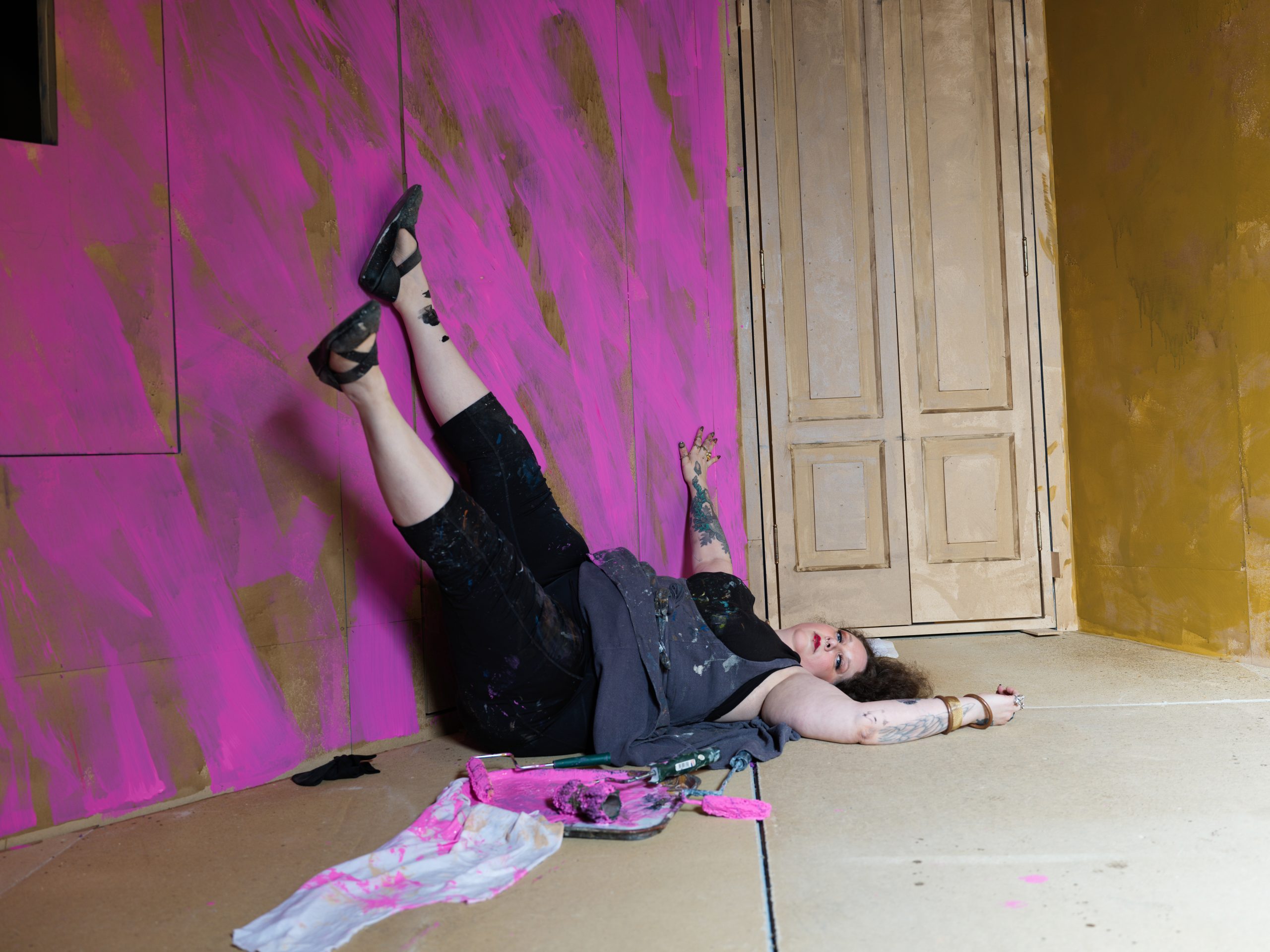
When I think about what I tell my apprentices, it’s probably this: you can be the best painter, but if you’re not kind and easy to work with, and you don’t care about people, it’s not going to matter. I like working with people who are nice. And I want things to be pretty around me.
I was meeting with a woodworker recently who advanced his CNC capabilities to the point of fully producing highly complex classical designs by machine, after which all he has to do is hand-finish them. Such detailed carving would otherwise be cost-prohibitive, and technology is what allows certain craftspeople to keep doing their work at all.
Exactly. There are techniques we can’t afford anymore unless we employ the technology. The machines can work for us; we don’t need to work for them.
How do classical techniques inform your approach to large-scale theatrical painting, and how do you adapt them to the fast-paced demands of New York’s production shops and stages?
They inspire my choice of steps. Instead of always starting a wood grain with a yellow or orange underneath, maybe I start the way I would with a Rembrandt reproduction: grain in burnt umber over white, then glaze on top. Do I start this backdrop on black, or charcoal, and build up like gouache? Or start on white, like a watercolor, and reserve the lights? What brushes am I using? All of that is informed by understanding what the artists did, what was on their palettes, and why.
A lot of historical methods were meant to be quick and easy. Vinegar graining, those swirly hope chests done with a feather: they’re easy if you have the right materials. The history gives me ideas about color palettes and helps me understand why constraints produced certain looks. It also helps me find language with a designer when there’s a barrier. Warm and cool, value and hue, mean different things in different cultures. But I can reference a painter or an era, and we can talk in words that aren’t so technical. Sometimes I just bring the designer to the mixing table and have them show me: this way, or that way.
“I looked at George W. Bush’s paintings and other immature work and asked: in exactly what way do we want this to be amateur?”
There aren’t just historical paintings; there are historical interiors. The World of Interiors, I love you. If I could have Saveur back as a magazine along with Domino, Nest, and The World of Interiors shipped to me, that’s all I’d need. I have decades of Saveur. When I’m looking for color combinations for my own performance pieces, where I’m dressing people, I go to those photos of people who aren’t styled for fashion, wearing their own clothes in their own kitchens, with the colors of the spices and the tableware. It’s not overly curated. It’s authentic. Authenticity is the word I’ve been trying not to say, but it’s what I’m most going for. Heightened authenticity. When you see the legs of a cabernet run down the glass, I want you to smell it just because you see it.
How do you replicate historic surface treatments with contemporary scenic paints without losing the original essence and patina?
You add the patina back in. I use shoe polish; I use waxes. Shellac is really important because it brings in that yellowing, and it’s an ancient finish with a very specific color, but it’s removable, so I’m never doing damage. It’s also great between layers: water-based, then shellac, then more water-based, and nothing disturbs what’s underneath. Historical methods might move between mineral spirits and kerosene. I just go between water and alcohol, water and alcohol. All the faux-finishing books deal with oil and alkyd, so I sat at home with the books and my own paints and redesigned it, nerding out on my own time, to make it green. Now I teach that. You still have to learn the drawings, why wood is the way it is, why the grain does what it does; look at these pictures of bad grain.
Early on I started getting asked to do a lot of art reproduction. During my first year painting in the city, I was asked to paint a scrim of Picasso’s portrait of Gertrude Stein, but with the face changed to the actress playing Stein in an opera called Blood on the Dining Room Floor at the Signature Theatre. I was also doing hair and makeup and assisting with costumes for this production at the Off-Broadway Signature Theatre, which stages many Juilliard-related performances. They rented me space to paint it on a wall right there. I had never been to Juilliard before, and while I was working I said, “One day I want to work here.” That was 1999.
When I walked out at the end of the day, I called my parents and said, “I was just at Juilliard painting a Picasso for money, and I’m going to go buy myself dinner.” After that I got more reproduction work. One year there were so many that The New York Times ran a piece headlined something like “The Tony Award for Best Painting Goes To…”. I did sixteen reproductions for Passion Play and got the best, worst quote about me in the paper. The director said they knew I could create something evocative not of great art but of the sickly sentiment required. That was a compliment. Bad art is hard to make. I also had to make a bad painting more recently, for Thérèse Raquin on Broadway. I looked at George W. Bush’s paintings and other immature work and asked: in exactly what way do we want this to be amateur?
I love early Bush as a reference.
Exactly. On opening night, people would be introduced to me as the one who did the painting and go, “Oh.” I’d say, “It’s my best worst work,” and they’d relax, because they were afraid I thought it was good.
You recently painted at the Metropolitan Opera, a long-held goal. How did it feel?
I was willing to go paint anything at the Met. When I was about fifteen I took the backstage tour and was just, oh my God. Zeffirelli’s La Bohème is one of the most beautiful opera sets you’ll ever see; that winter scene is to die for. They just restored it, actually. I was lucky to get a day of work there before my fiftieth birthday.
In my early twenties I made a plan. Scenic artist in my early twenties, charge in my late twenties, union scenic artist in my thirties, union charge in my late thirties. In my forties I’d start blowing glass and take voice lessons again, so by my sixties I’d be singing, and then I’d start painting again. What actually happened: I was a scenic charge at twenty-five, in the union by twenty-seven, and a union charge by thirty. I spent fifteen years making performance art pieces and throwing parties. The one thing I hadn’t done was the Met, and I got it done.
You’ve done everything you set out to do. What’s next?
I don’t think the answer is dreaming bigger. I had good reasons for not chasing the art market, and I don’t want to be a pop singer.
I love jazz, I love cabaret, and I’ve been told those are achievable with my voice and my charisma. I’m thinking of a cabaret show, painting, creating a tarot deck, and continuing to teach. My body and mind together will tell me what’s next. By March I’ll start figuring out what the next fifty years are supposed to look like, because there’s so much more I can do. Right now I’m working on a set of paintings with my friend Adrian Buckmaster, a photographer in Bushwick who’s in his seventies. We’ve had a mentor-muse relationship that goes both ways. He taught me photography, styling, and how to run a shoot; I styled a number of things in his book. Then he started painting, so now I’m mentoring him. In two weeks, we start portraits of each other, and from there we’ll make maybe ten works each and find a space for them. After the year I’ve had, I need an artistic aim that isn’t me hosting a party, making costumes for sixty people, and dealing with all their emotions. I need to do something for myself.
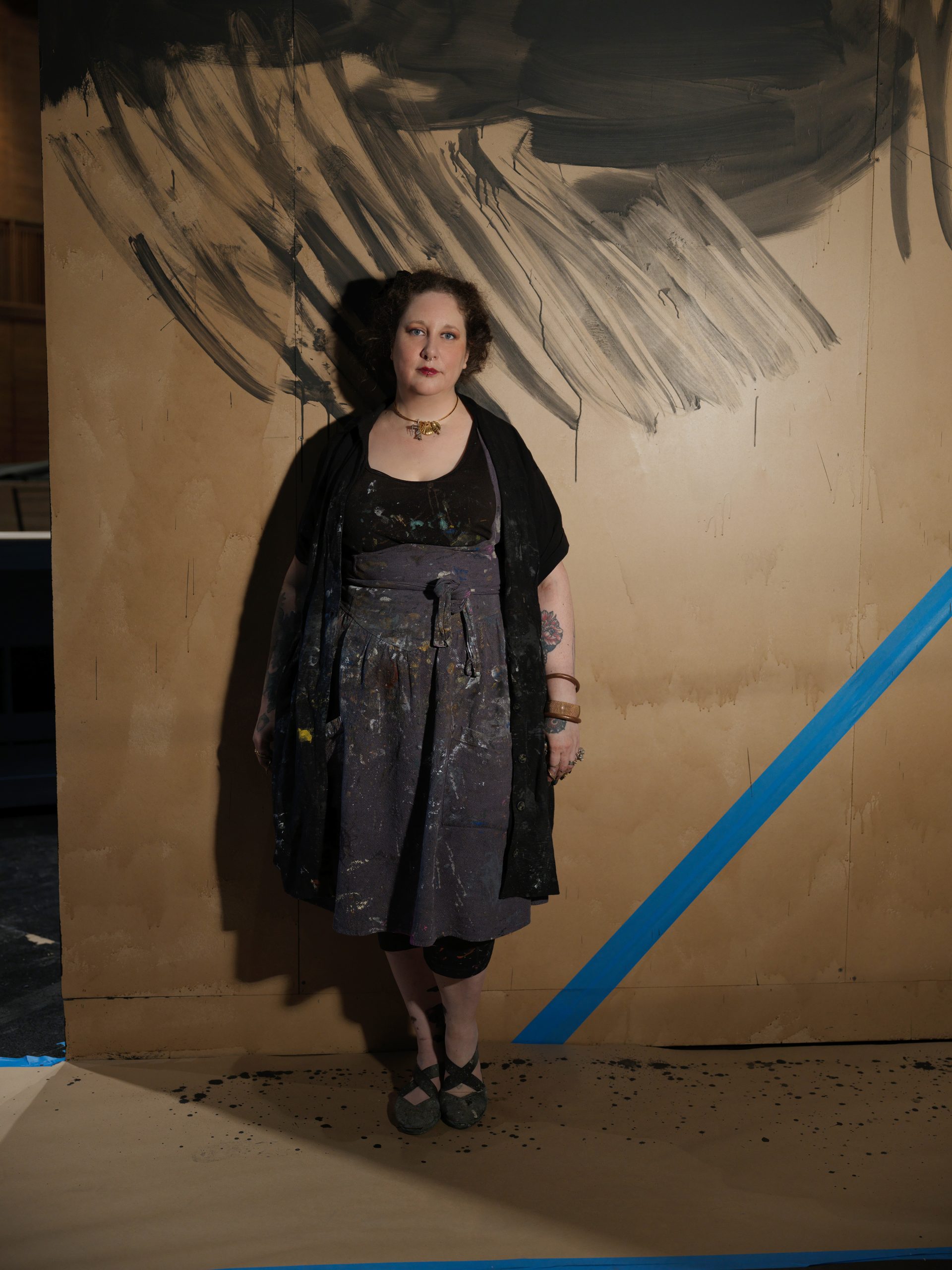
Jenny Stanjeski is a painter, performance artist, fabricator, arts educator, scenic charge artist, and head of the Professional Apprentice Program in scenic art at The Juilliard School. She also makes art reproductions and has collaborated with the design firm Charlap Hyman & Herrero.
Chelsey Mitchell is the founder of Chelsey Mitchell LLC, a New York–based design firm operating internationally, with ongoing projects in London, UK; Venice, Italy; Palm Beach, FL; Chevy Chase, MD; and New York, NY. The firm specializes in interior architecture, interior design, and bespoke furniture.