After Education: Salome Asega Keeps New Inc New
Educational institutions provide access to resources — software subscriptions, printing facilities, CNC cutters, recording equipment. Big tech companies provide tools for production, too, if you happen to work for one. But for creatives that inhabit anything between those entities, infrastructure is limited. Founded in 2014 by the New Museum’s then director Lisa Phillips and deputy director Karen Wong, New Inc has sought to close that gap. Conceived as an institution-within-an-institution, the incubator for practitioners working across art, design, and technology has since combined professional development, mentorship, shared infrastructure, and public programming in a model that borrows as much from educational contexts as it does from artist collectives and startup culture. New Inc’s members are co-authors of that vision, not simply beneficiaries, shaping curricula and conversations around emerging concerns ranging from cooperative economics to artificial intelligence.
Having participated as a member of the 2016 cohort, Salome Asega — an artist, educator, researcher, and advocate who was the Ford Foundation‘s inaugural New Media Art Research Fellow for Creativity and Free Expression — formally joined New Inc as Director in 2021. For the first several years of her tenure, lockdowns and renovations forced the incubator to function partially nomadically. As the New Museum moved into its OMA-designed expansion this year, doubling its Bowery footprint, Asega stepped into an augmented role as the museum’s Deputy Director of Strategy and Innovation, putting New Inc not just back in the building, but at the heart of the institution’s master plan.
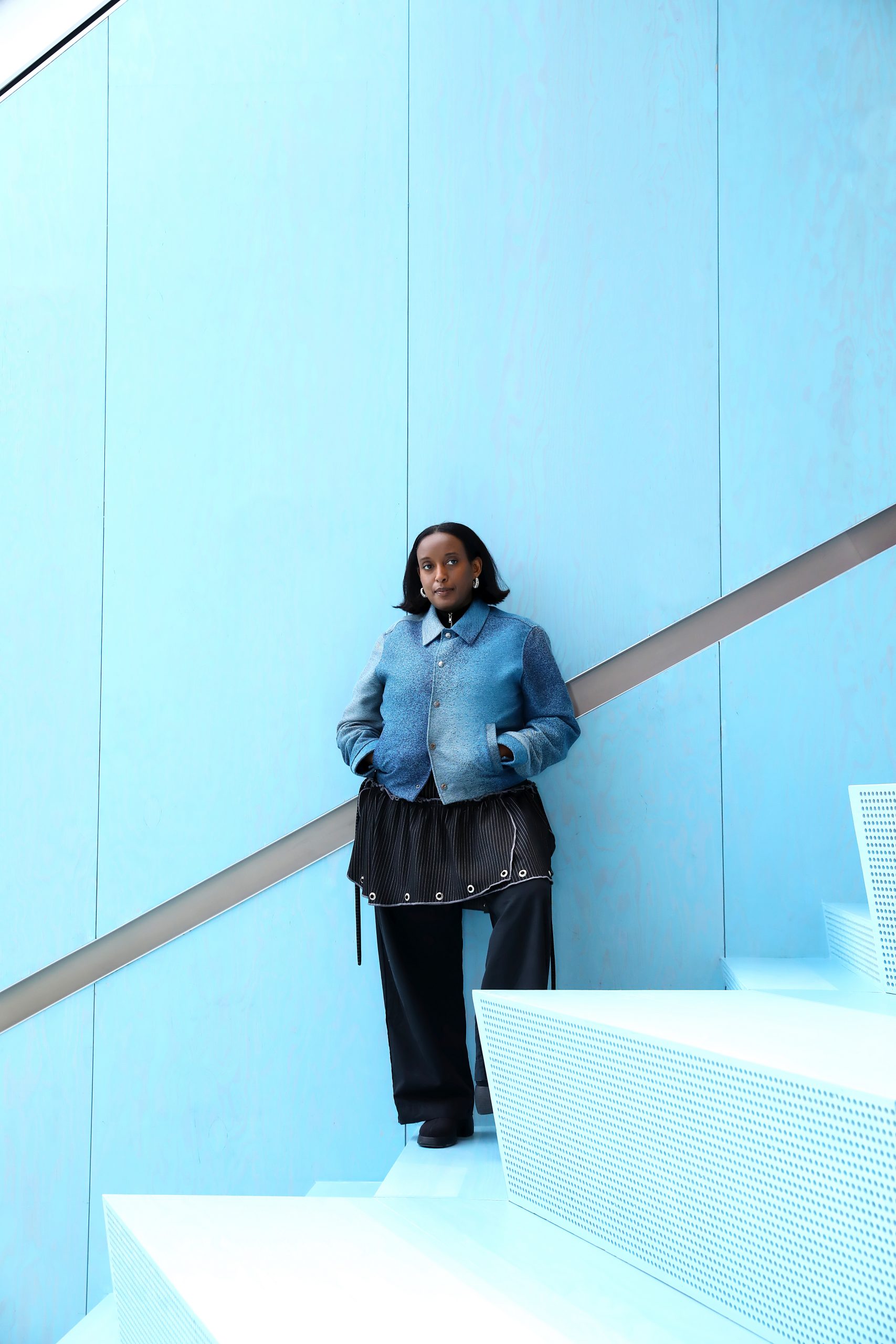
Reinstalled in its purpose-built home, this week New Inc kicked off DEMO2026, the first iteration of the annual DEMO festival to be staged within the New Museum’s walls. Asega spoke to Topical Cream’s editor in residence ahead of the events to offer a snapshot of a broader shift underway: from institutions as places that merely display culture to institutions that actively help produce it.
Victoria Camblin: What does the move back into the expanded New Museum mean to New Inc?
Salome Asega: I have a long history with the New Inc program. I was a member in the third cohort year, and at that time we were right next door to what was then just the Sanaa building. New Inc was on the second floor, and it was just buzzing with energy. It was still such a raw space. People were on top of each other. We were always scrambling for a desk. It was the kind of place where people congregated around a water cooler and friendships were made, collaborations were formed. I have deep love for that era of New Inc. When I inherited the program, it was during the pandemic, so everything was virtual. I was probably more ready to get back into the space and recultivate that early energy than anyone else on the team. Now we’re in our purpose-built home in the expanded New Museum, and it is so much more than a space for coworking. We’re a space for production. There are two new lab spaces, including a media lab and a fabrication lab. We’re no longer just a place for incubating ideas — we are starting to actually materialize the projects that people are coming to us with.
VC: You mentioned the space is purpose-built — what new functions were you thinking about and how does the architecture respond to them?
SA: Our core offerings at New Inc include a rigorous professional development program. Participants are supported by a cloud of more than 150 mentors. We really wanted to signal convening: this is a space for meeting people. There are conference rooms, an open floor desk plan, a pantry chill zone with soft seating. The space is set up to chat — to yap. We knew that people were no longer working in offices like they used to, so we went to a hot desk model where people can plug into monitors with their laptops. But the real draw is the expanded production space. People can come to 3D print or laser cut; they can plug into a giant LED wall and work on live animations with the motion capture system. It’s really a space for play and experimentation. While all the work is rendering or printing, you can hang out with other New Inc members and talk about your projects.
“We’re not afraid to learn in public.”
Salome Asega
VC: Were you looking at any other models — whether institutional or corporate — that influenced the way the space functions or that take it out of a typical co-working set-up or traditional academic context?
SA: Educational spaces continue to be a huge influence. A lot of the resources that are made available through New Inc are things you lose access to once you graduate from college or leave an institution. We serve in some sense as an extension of that access. When I was at the Ford Foundation, I produced some landscape studies, one of which was a partnership with the National Endowment of the Arts and the Knight Foundation. We hosted regional roundtables with artists working with technology, and one of the recurring things that would come up was that artists would often seek out teaching positions to ensure that they had continued access to resources to make their work. We are thinking about how New Inc can provide alternatives to that system.
New Inc is very responsive to the people who are here. Each cohort year looks and feels different from the last because it’s based on who is present. When people join us, they fill out a member’s intake form, and that’s how we develop the curriculum and community programming for the year. Recently we’ve obviously noticed an uptick in interest around understanding AI — in AI’s impact on creativity, AI’s impact on work. In response, our professional development curriculum is bringing in experts who can respond to that. Last year there was a deep interest in cooperative studies and how the history of cooperative business models can be applied to studio practices. So we had a whole thread on cooperative structures that reflected that. We’re just in the middle of selecting the next cohort, so I’m not quite sure what’s bubbling up yet, but when we meet and share notes, we’re going to see what the trends are.
VC: The water cooler talk you mention must also be a great tool for understanding the Zeitgeist.
SA: We really believe that learning is multidirectional. It doesn’t just come from the New Inc staff programming things. It happens between the members and the mentors, and between the mentors and their peers. Given the architecture of this building, people walking between professional development workshops and mentor meetings are also absorbing the exhibitions, right? That is an information stream that might set you on a Wikipedia deep-dive once you get back upstairs.
VC: The New Museum’s first exhibition since the remodel, The New Humans, seems very directly aligned with New Inc’s focuses. Are the platforms converging?
SA: We’re all in one building now, and we’re just at the beginning of figuring out what that will mean for the programs. One of our alumni, Stephanie Dinkins, is in the New Humans show on the fourth floor. We’ve started collaborating with the education department, which has an amazing teen program and will sometimes tap our New Inc members to lead workshops for the curriculum. We did a workshop with our member Andreas Laszlo Konrath, who has an amazing project called SHRIMP ZINE, a web app designed to help young people create printable zines on their phones. Our artist Adelle Lin gets teens to imagine the future through different dimensions then create augmented reality amulets — wearable jewelry that can be triggered by your mobile device to reveal an AR monument. We also have a strong collaboration with the store, where there’s a whole display dedicated to New Inc member products. It is really special to go through a whole year in our program and then be able to bring something to market and test it out in that way.
VC: You spoke to Emmanuel Olunkwa for Pin-Up magazine a few years ago, and in the interview you had an anecdote about doing a workshop with court-impacted teens. When you asked participants to envision the future, some of the feedback was, “look, we’re just trying to get through the day right now.” That was still the pandemic era, but we have had manifold crises since then. What is your experience of or approach to coming up with models for the future today, when we are freaked out on a global scale?
SA: I think that’s what I feel called to most in my work with New Inc. How do we create the conditions for people to feel a sense of safety and freedom to “go there,” to do the scary and vulnerable thing of imagining the future and saying, “this is the thing I see for my life, it can be reached, and it can be reached in this community.” When people feel like they’ve landed somewhere they can think in that way, that’s when the work at New Inc feels most rewarding. Of all the ways we collect impact data here, it’s the anecdotal, “I found my people” feedback that makes me feel like we’re doing a good job.
“How do we create the conditions for people to feel a sense of safety and freedom to ‘go there,’ to do the scary and vulnerable thing of imagining the future?”
Salome Asega
VC: How does your role at the New Inc, and now at the New Museum more broadly, connect to your own practice as an artist and researcher and educator?
SA: My work has always been highly participatory, and I’ve always played with fictional institutions. Now I get to apply some of that thinking to a real institution. I’m interested in certain scales, like testing what horizontal decision making can look like. I’m interested in levels of transparency and participatory budgeting — which are things that we can actually test at our scale at New Inc. As I move into a different scope with my new role, I’m thinking about where some of those tests can maybe be applied in larger ways. I’m excited to figure it out. I now have “strategy and innovation” as part of my title, and something that has been coming up for me recently is that a key feature of strategy is diagnosis. The first thing is not to roll out some kind of strategy, but to listen and figure out where we are and what should happen next.
VC: Where does data come in here and how do you balance that with more human, anecdotal observations that you mention? I have been thinking of strategy as a therapeutic practice — you have to become an organization’s psychoanalyst before you can recommend a course of action. It has forensic component, like evidence gathering.
SA: Totally. We track all kinds of things — how many workshops people are taking, how frequently they are meeting with their mentors, their operating model or budget when they start working with us versus when they exit, staff increases in their studio or businesses. That data doesn’t just sit secretly in one of our folders. We present that information back to the cohort as part of an annual town hall. It’s made public, then we collect feedback on ways we can improve the program. What I really appreciate about New Inc team is that we’re not afraid to learn in public.
VC: “Learning in public” is built into the literal architecture at New Inc now. Do you see “making public” — public programming, publishing, knowledge sharing — as a fundamental part of what a museum does, as an institution?
SA: Well, some important things that we’ve been able to collect through New Inc are revealing to us an audience and community around the museum overall. That will be a continued part of my role: thinking about audience development, especially with our larger footprint. We’ll be doing more programming at the museum, for example, so the question is: who are we serving and how do we meet them? When I first started, New Inc felt like a secret community of people operating in the corners of the museum. So it was important to me to start doing public programming around their work. I started small, breadcrumbing, hosting evening programs throughout the year. Programs sold out quickly, consistently. Once we realized that there was appetite and energy around this work, I put together a plan to combine these disparate programs into a larger festival we call DEMO. That started iteratively, through tests, and now it is an annual three-day event and an integrating part of the regular programming calendar, which gives New Inc a consistent public face throughout the year.
“A key feature of strategy is diagnosis. The first thing is not to roll out some kind of strategy, but to listen and figure out where we are and what should happen next.”
Salome Asega
VC: There are a lot of “institutions within the institution” happening at the New Museum, with New Inc, but also Rhizome for example. Is that a strategic model that might allow smaller entities to continue to survive in an era of funding volatility — to basically future-proof experimental non-profits by sort of playing host?
SA: It’s very smart to kind of consolidate or collaborate around programming and shared operational needs. It strengthens every aspect of the work and helps us meet an overlapping audience together without splintering resources. Rhizome is a track mentor at New Inc and helps us steward our art and code work. That program is made infinitely stronger because of our partnership — applications have increased year after year.
VC: What are you thinking about right now when it comes to the future of the art institution? What are the challenges and shifts you foresee or are trying to redress with the work that you’re doing?
SA: One thing I’m tracking is shifting expectations around what audiences want to see in cultural institutions. We have an increasingly layered understanding of how people consume culture, and it’s become very hybrid. Everything is starting to bleed into each other. Museums need to understand this multi-pronged approach to culture if we are going to meet our audiences where they are.
VC: A decentralized, distributed ethos seems important to New Inc philosophy. Now that you are more fully embedded within the New Museum, is there a risk of New Inc becoming too institutionalized? Are you thinking about maintaining this diffused framework now that you are back “in house”?
SA: We’re now centralized in place, but we’ll always be distributed in ideas and programming. Plus, now we can invite the peer organizations that have really supported us while we didn’t have a permanent home in the last couple years back into the museum with us. That’s exciting.