La littérature n’est pas innocente, et, coupable, elle devait à la fin s’avouer telle. (Literature is not innocent; it is guilty, and should admit itself so.)
— Georges Bataille, La littérature et le mal
Lyndsy Welgos: Camille, I’m wondering if you are deeply interested in theater in general, or if this was just an off-the-cuff idea which spun out of control and into a living manifestation. Where did the first germination of this idea come from? Knowing how you grew up in Paris, and all the incredible gardens and the Renaissance influences, I believe the architecture of that city has had a heavier impact on you than you realize.
Camille Henrot: Yes, especially because I was living in the 17th arrondissement, which is an area of Paris where, in the 19th century, there was a return to a Renaissance style. There was a building a lot of buildings in the style of Venice, in the style of the Renaissance, and there was a lot of decoration: women holding up doors, masks, and figures of demons everywhere. I remember being very intrigued by and attracted to that. But I also remember that all the performances for children were based on commedia dell’arte, and I remember feeling a little bit disturbed by them. I didn’t actually like them. I felt there was a lot of cruelty, a lot of people being beaten, a lot of injustice in these puppet shows, because commedia dell’arte is a kind of staging of social injustice.
LW: In the traditional form there’s the old man, and all these different tropes come together in this public fantasy.
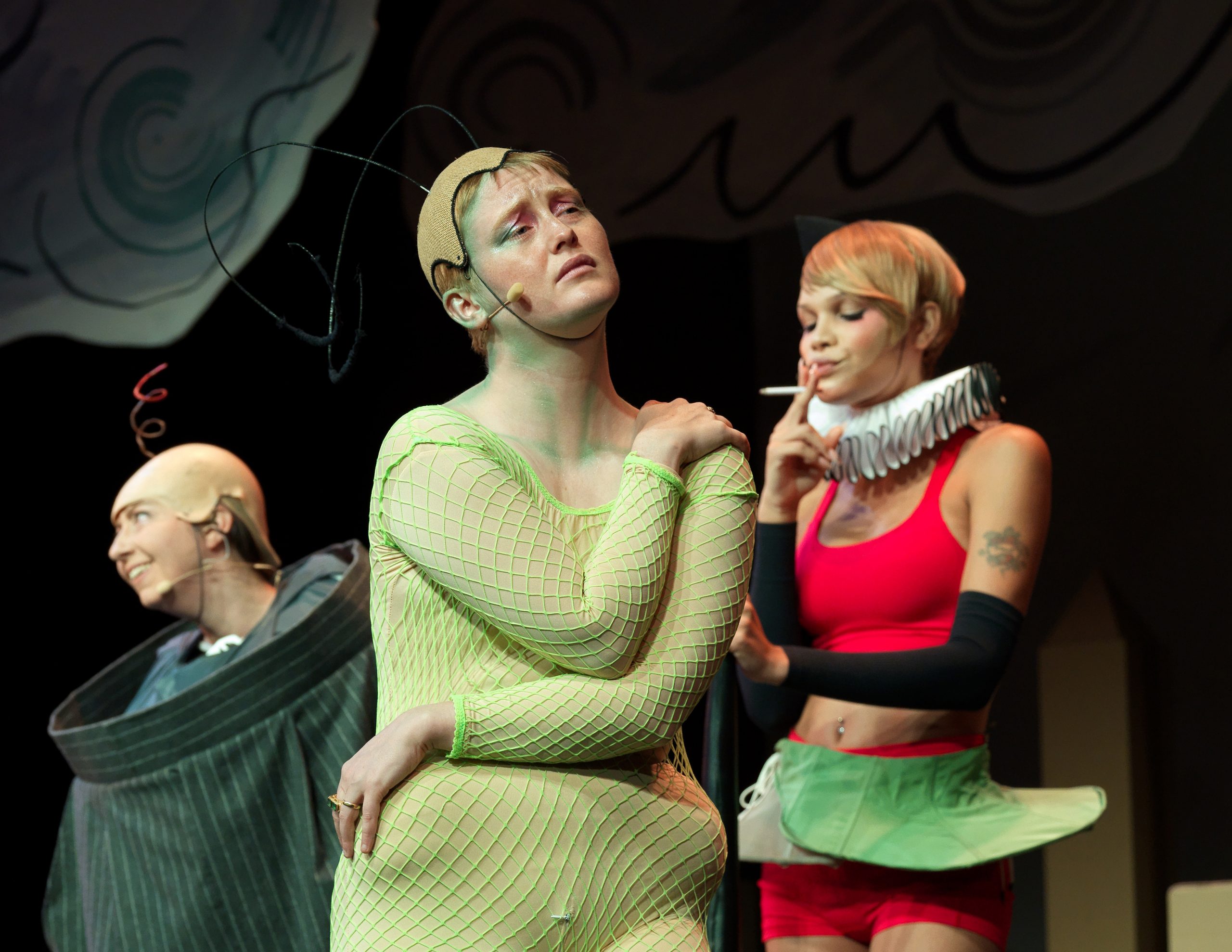
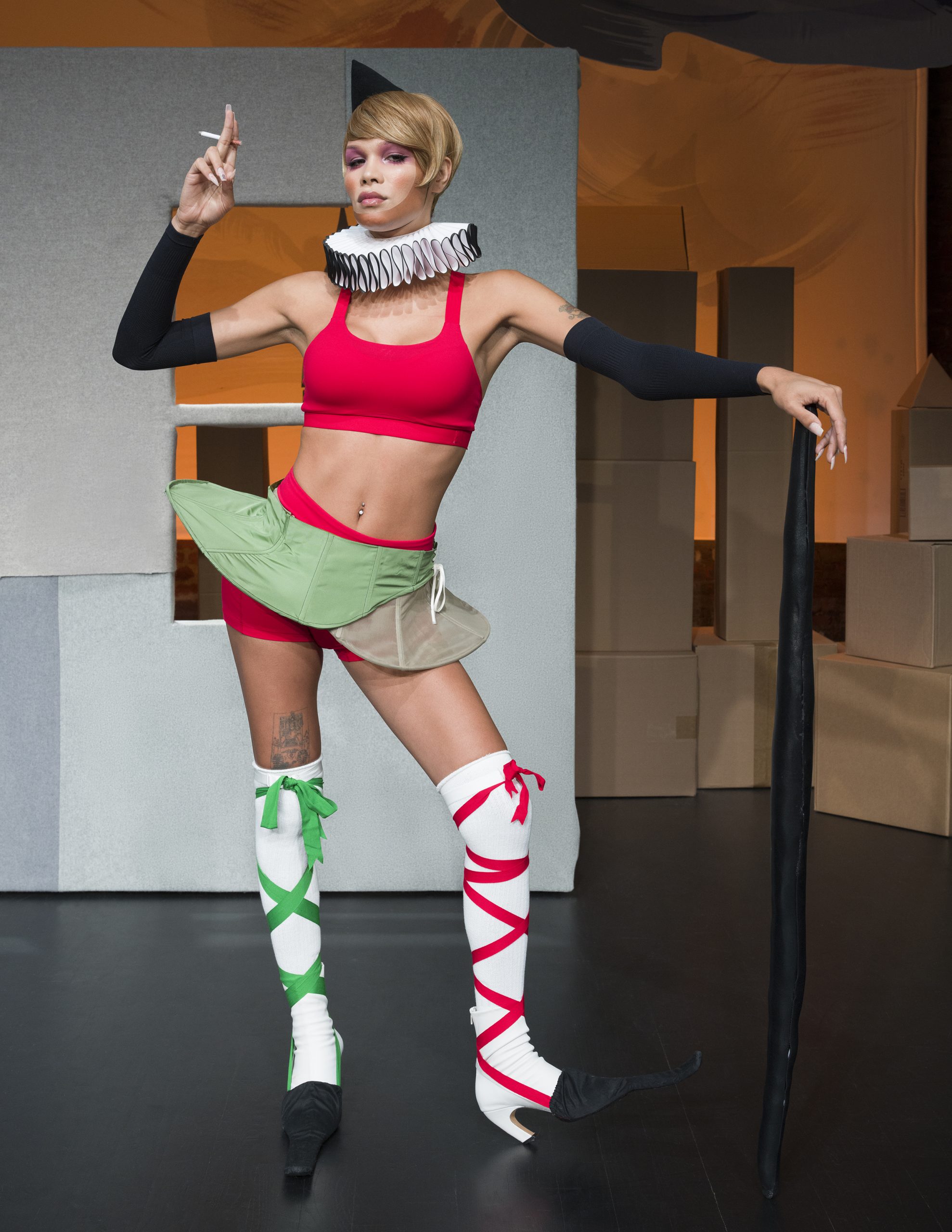
CH: Yes, the archetypes are always the same. Capitano, for example, has existed since the 15th century, I think. It’s a very old archetype. He represents the young guy who brags a lot, who is very submissive to people in power but very aggressive with people he identifies as weak. Pantalone is the archetype of the entitled character who abuses power , but also the doctor. In Naples, anybody in a slightly elegant costume would be called “doctor.” You find the caricature of the doctor a lot in Molière as well, because Molière was very inspired by commedia dell’arte. I think commedia dell’arte really infuses every aspect of French culture, from Molière to the vaudeville (which inspired later American comedy). The grasshopper, the character I added, doesn’t come from commedia dell’arte; it comes from Moliere’s fable inspired by Aesop’s fable. The fables were written more or less in the same period, the 17th century. In the fable “The Ant and the Grasshopper,” the grasshopper embodies the artist as someone with a “fun job” who doesn’t anticipate hardship, while the ant lives a boring life, but has enough to survive the winter. Pulcinella is always a mischievous, working-class character. Pierrot used to be a very mischievous trickster as well, but as the character evolved from Italy to France, he became more naive, more like someone who comes from the countryside and discovers the customs of the city. And then Arlecchino, the trickster, is the main character and probably the most important and best-known character of commedia dell’arte.
Estelle Hoy: Each character in our play stems from one of the traditional stock characters, whether it’s Harlequin, Pantalone, Columbina, Pulcinella, or Pierrot.
LW: I want to talk about how you went from painting to film to theater. What are the mechanics of that came about? It’s a little unusual. It reminds me a bit of Alexander Calder and his puppet shows.
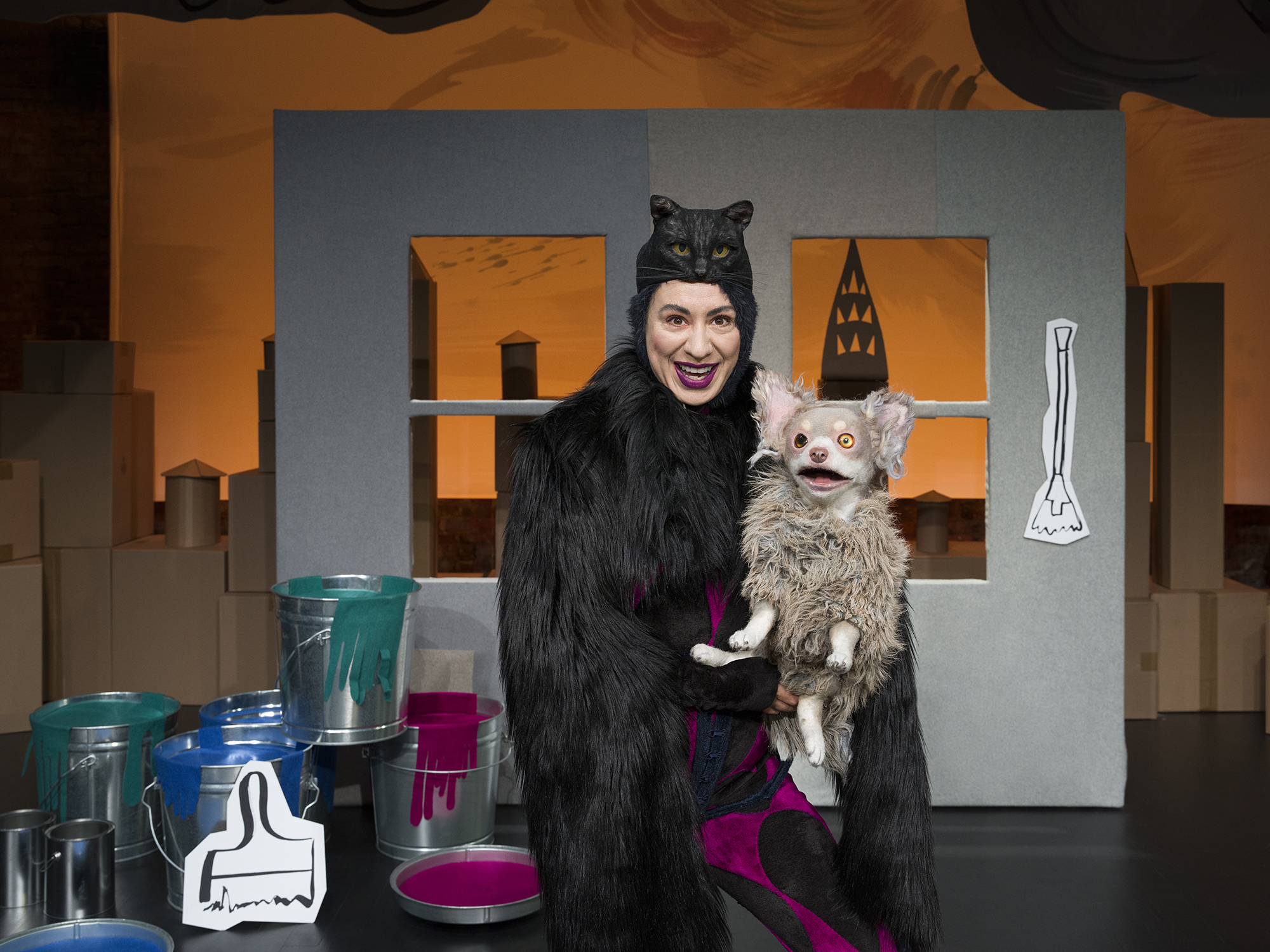
CH: Yes, he did. Dada theater, especially Cabaret Voltaire, was on my mind. I wanted to do something that feels very Renaissance, even pre–French Revolution, because it felt like the moment we are living in right now, especially in New York, where social inequities are so visible. The tools people used at that time to vent and to express social injustice are still relevant. I also really wanted the piece to reference Tex Avery and Buster Keaton, to have really physical comedy.
LW: But historically, that was done more with theater than with art.
CH: Yes, because it was a popular form, not an elite form of spectacle. Commedia wasn’t played initially at the court of the prince or the king. It was a street type of performance.
LW: The title is really compelling. How did you arrive at this?
EH: Precisely. A little cliché, but here’s a telling anecdote. When we first talked about doing this piece, it became more and more extravagant and convoluted, as is our custom, so we decided to give it a really simple name to balance it out. The original title was Rent Is Due. The team at Performa began reaching out to different people to see whether specific artists or actors might want to be involved in the production. It was bizarre and frankly disheartening because no one was writing back. We were thinking, “Maybe it’s not a particularly striking project.” It turned out artists were receiving the email with the subject line “Rent is Due,” probably with a few exclamation marks, and freaking out and deleting it because they thought it was some sort of rent notice!
LW: There was confusion that this was an actual rent notice.
EH: It was a very triggering email, apparently, so everyone was just deleting it. (laughing) Understandably. I mean, affordable housing has become such an unaffordable privilege under neoliberalism. Artists thought the email was some sort of economic blackmail, and who can blame them
CH: We got a note from Performa saying that the title was so distressing for people that, even as a humorous take, just seeing those words in an email was generating a negative reaction. So I decided to go with Commedia dell’arte. First, because many American friends told me that nobody in the US knows anything about commedia dell’arte and people would be confused. I thought let’s put the title out there so people can Google it right away and find some information. And second, because if you understand the title literally, it means “the comedy of the arts,” and I think a lot of us art workers are playing that comedy all the time: pretending we’re always fine, going to all these cocktail parties, dressing up, taking pictures of ourselves next to glamorous philanthropists, pretending class doesn’t exist. And behind the scenes, l’envers du décor, there’s this unstable pile of realities in the play, and in life: the nanny who made more money than you did this month because you had to work in the evenings, and the impossibles New York rents, and the resistance of society to attribute a material value to any kind of artistic labor.
LW: Justine, can you tell me about how you entered this collaboration?
Justine Gelfman: Camille brought me into the project last November as a co-writer. She and Estelle had already created this incredibly rich visual and conceptual world. I was immediately excited by the challenge of bringing my theater and comedy background into conversation with their practices. I’ve also always been really drawn to the visual art world. My grandmother was a docent at the Whitney for thirty years, so I grew up hearing her talk about different exhibitions, and my mom and cousin are both visual artists. Getting to collaborate with Camille and Estelle and work across disciplines was a total thrill for me.
From there, Camille and I entered a really intensive collaborative writing process, with Estelle continuing to offer invaluable guidance and feedback as the script evolved. We started by looking at the larger dramatic architecture, how the story moved, what each character wanted, and how one encounter triggered the next. Then we worked back and forth, sharpening scenes, dialogue, and jokes. Camille was constantly generating new ideas, drawing from an extraordinary range of historical to pop culture references, and I brought my instincts for scene construction, character, and comedic timing. Very quickly, those approaches became intertwined. Aspen Art Museum and Performa were also enormously supportive throughout the development process and huge champions of the piece.
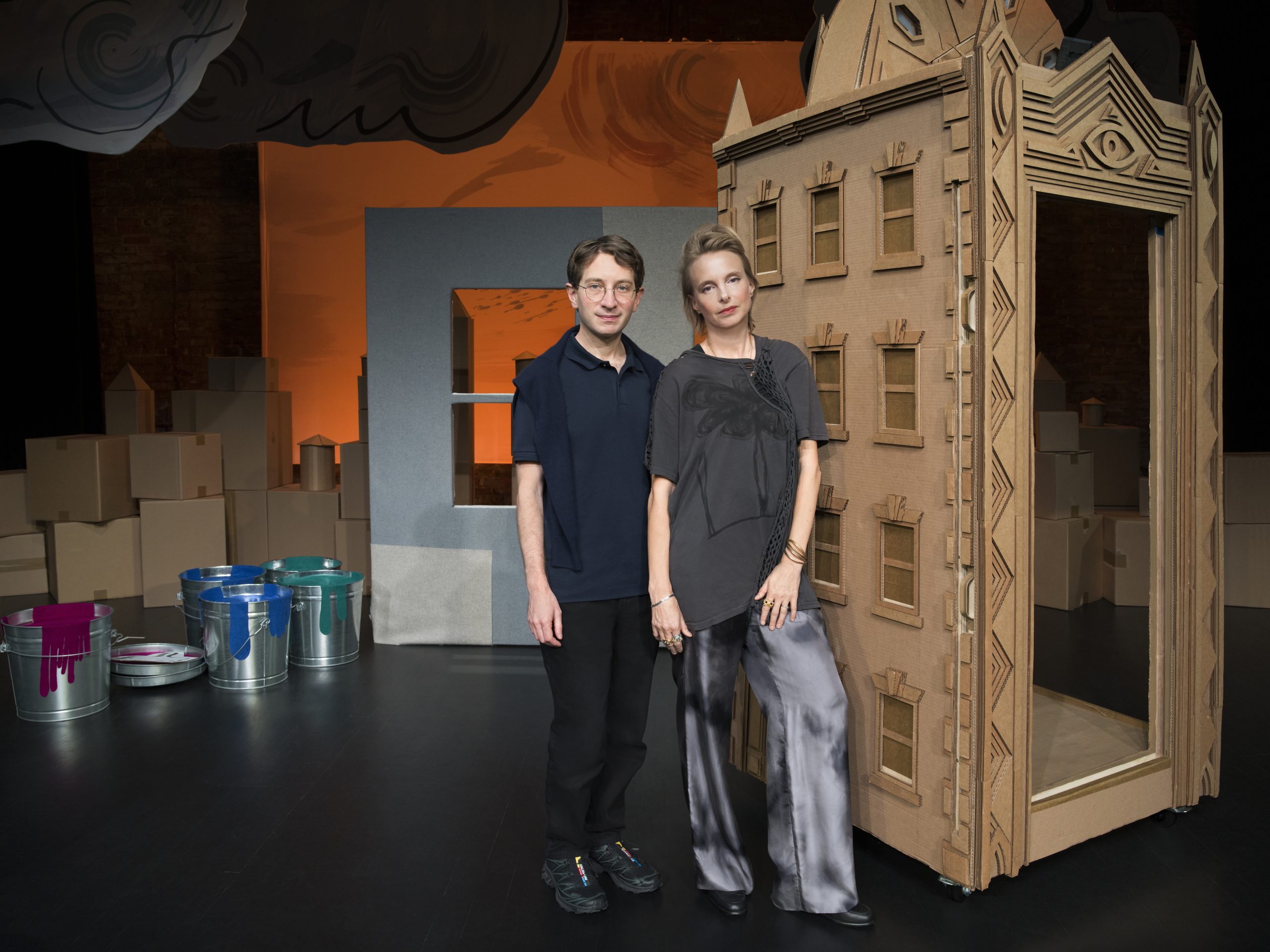
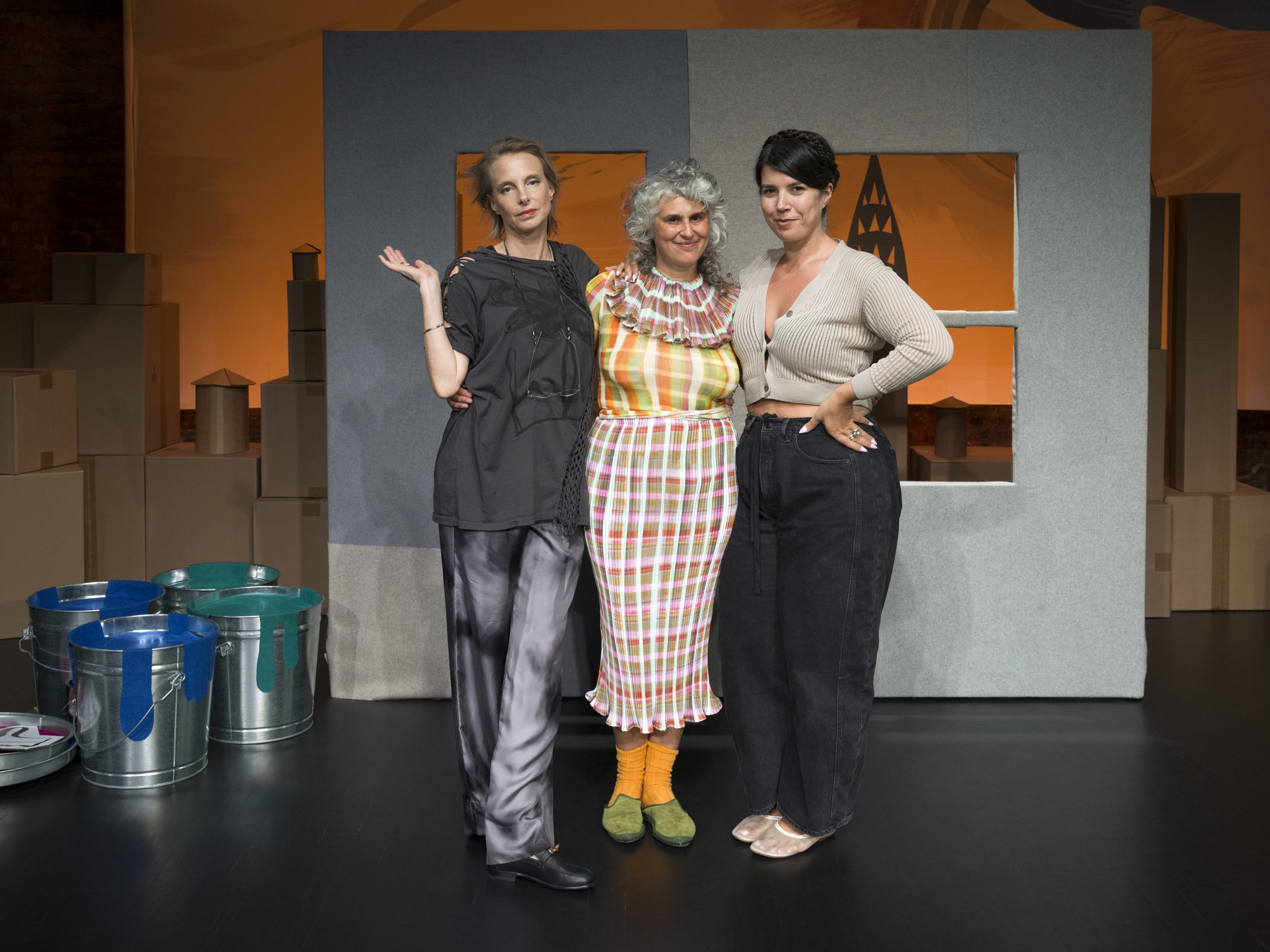
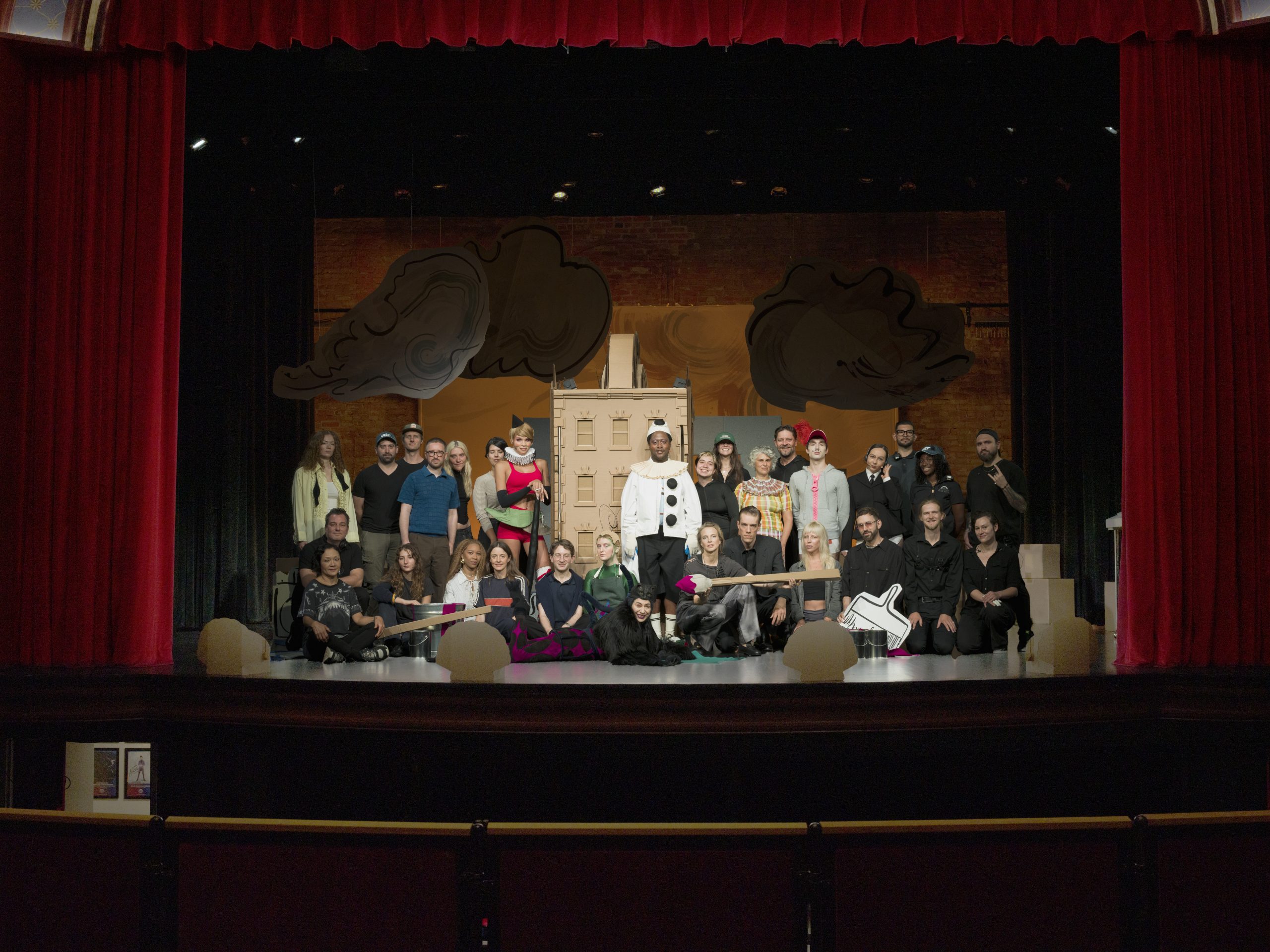
CH: Estelle and I went to Tuscany together, and that’s where we had the first conversation about what the plot could be. We were just throwing out a million joke ideas, with no linear arc, and Mauro Hertig, my husband, panicked seeing us go in a million directions like little raccoons. He said, “You guys need a plot. What about the delivery of a package?” And we said, “Ok, we’ll do that.” And then we just ran away with it.
LW: I also wanted to touch on the collaboration with Adam Charlap Hyman, who created the scenography, which was so delicate and incredible. How did he come into the picture?
EH: That’s been a long-standing collaboration. Camille and Adam have done several pieces together, including a recent show at Hauser & Wirth in New York, A Number of Things. The turquoise grid flooring for that exhibition was astonishing. Adam and Camille really have that kind of psychic connection, and whatever materializes is often exactly and precisely what she’s trying to articulate.
LW: Going back to theater as a popular form, I remember reading about The Astor Place Riot of 1849 over two rival productions of Macbeth. There was an upscale opera house and a more working-class playhouse very close to each other, and one night they both mounted a performance of Macbeth. After the curtain fell, a deadly brawl broke out.
CH: I’m going to see Macbeth tonight! At the theater last week, I met a historian of seventeenth-century French literature who saw so many interesting aspects in our commedia play. She said she saw one of the most important characteristics of commedia: ambivalence. There are a lot of moments where you’re not 100 percent sure what you’re supposed to think.
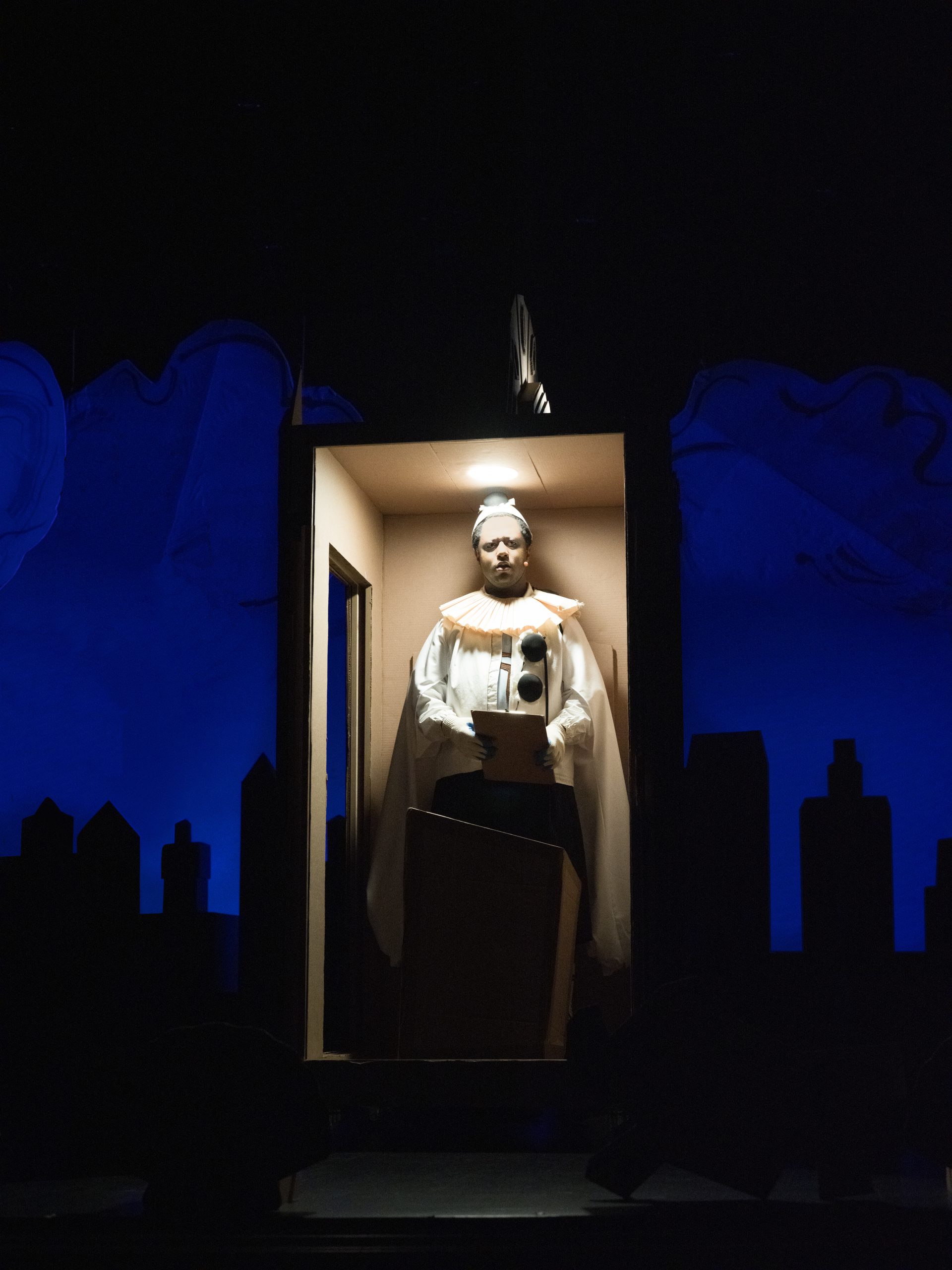
It’s slightly embarrassing, and you wonder, “Am I supposed to take the side of this character or not? Is this character good or bad?” Apparently that is really what characterized commedia dell’arte in the past, and it’s the reason it was banned and censored. The French government tried to prevent people from performing this kind of theater, not because it made fun of powerful people—they knew people needed to vent in order not to start a revolution—but because of these characters who sit in between. For example, when Pierrot is crying, and he’s crying in a way that is ridiculous, you’re making fun of a character who’s crying. So what’s happening at that moment? Do you have empathy or not?
It’s from Bataille: the idea that literature is a way to renew, to refresh childhood. In that way, evil and good had to be very distinct and defined, like Pierrot and Pantalone, but the emotions around them can still be ambiguous. I feel that innocence, humor, and naivety, a childlike spirit, is always a very efficient perspective from which to expose injustice.
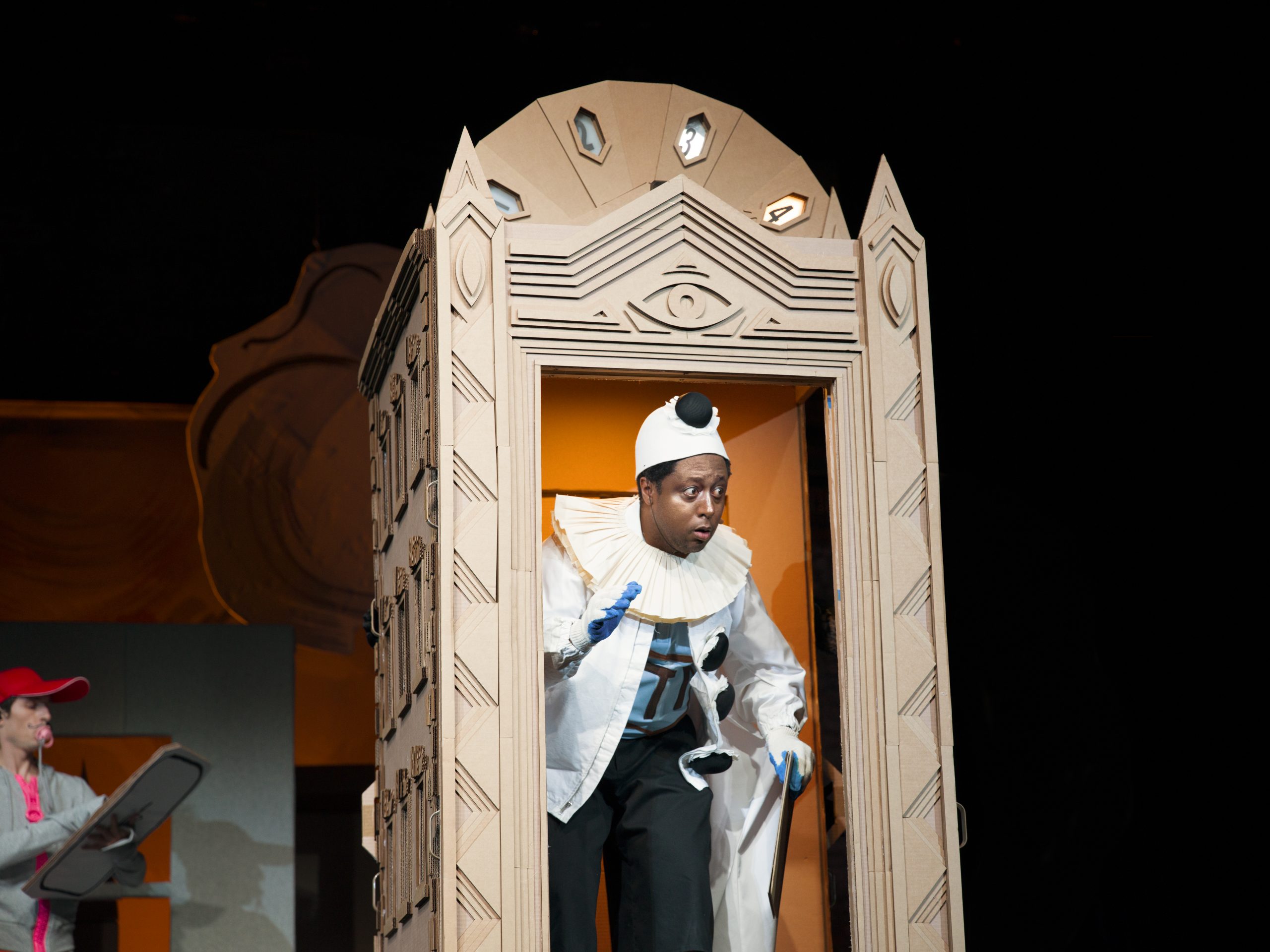
LW: Like Pulcinella. It seems like what she’s most interested in is defining the etiquette of the moment. She’s standing back and watching, making sure that what’s going on isn’t going to be a disaster, and staying on the right side. One of the most important mechanisms of the play overall though is how it delves into the many realities of being a working artist in 2026. One of those is gigwork and precarious labor. You approach that on several different levels, including Pierrot, the clown who is a delivery worker for a company called UTI and also an MFA student. I was also thinking about the Pilates teacher, who, in a funny way, represents another form of health-related gig work. And then there’s this question of landlords scheming to remove tenants, particularly artists, from neighborhoods where artists were once seen as a welcome addition. There has been a shift where artists are not always viewed as a positive addition to a real estate portfolio. Instead, developers and landlords are increasingly looking for celebrities, influencers, and people who can generate a different kind of visibility. Can you talk a little bit about how you were approaching that subject? The way I see it, you wrote this play for artists. It feels almost like a love letter to artists.
EH: A love letter to artists. That’s so beautiful. I don’t know that I ever write for a specific audience, to be honest. I’m not sure Camille and Justine feel the same way, but as we flesh out ideas, we haven’t determined a particular demographic, or at least not consciously. But I do think our discourse around gentrification in Berlin and New York was definitely a precursor to Commedia dell’arte. The cost of living in Berlin is now wildly exorbitant, and most artists can’t survive here anymore; rents have more than quadrupled since 2014, and old rent-stabilized apartments are a thing of yesteryear.
I think Camille, Justine, and, well, all of us, have seen the same dystopia in our respective cities. It’s a hardship for many of us to maintain even a phone contract these days, let alone an apartment. God, anyone who can maintain housing and a prepaid phone plan is pretty much a roaring success to me. And there’s so much pressure on us to use our imaginations, to float businesses while waiting for people to pay our invoices.
LW: I thought you were considering the state of the arts from the perspective of the artists.
CH: For me, artists understand the struggle because they are in it. They don’t need to be convinced. A lot of them have come to me and said what a release and what a joy it was to see their problems reflected. But the truth is the play was actually for people who are in a more privileged position to understand the struggles of the artist, and to stop thinking about the artist as some kind of fairy or magician, where you just put two drops of water in a flower and she’s good for a month.
LW: In the play’s setting of an apartment building, all these artists moving in are what made the building valuable. Pantalone the landlord is upping the ante and thinking that artists are less valuable, that influencers and royals and celebrities are where the value is, not the community of artists who brought the value in the first place.
CH: Yes. What was interesting for me is that the character of Pantalone, as we see him, is also a bit of a baby boomer, from another generation, and so he projects value onto something that is actually very out of date: the prince, the royals, and also the celebrity. I feel like a lot of young people don’t value celebrities’ opinions and choices anymore. But we still live in a world that’s dominated by a boomer perception of what’s valuable and what’s not. There’s a lot of generational conflict in this play, and I was able to see it very clearly across all the iterations, because when the audience is older, they really don’t laugh at the same jokes as the younger ones. For example, there’s a joke when Pantalone says, “Everybody always asks where’s the landlord, but nobody asks how’s the landlord. Did he have a well-rounded breakfast? How are his investments doing?” People were peeing their pants on Friday and Saturday, because it was a very young audience, and they understood very well how it’s probably directed at their own parents’ generation. You come to ask for help, and the reply is, “What about me? I’m suffering.”
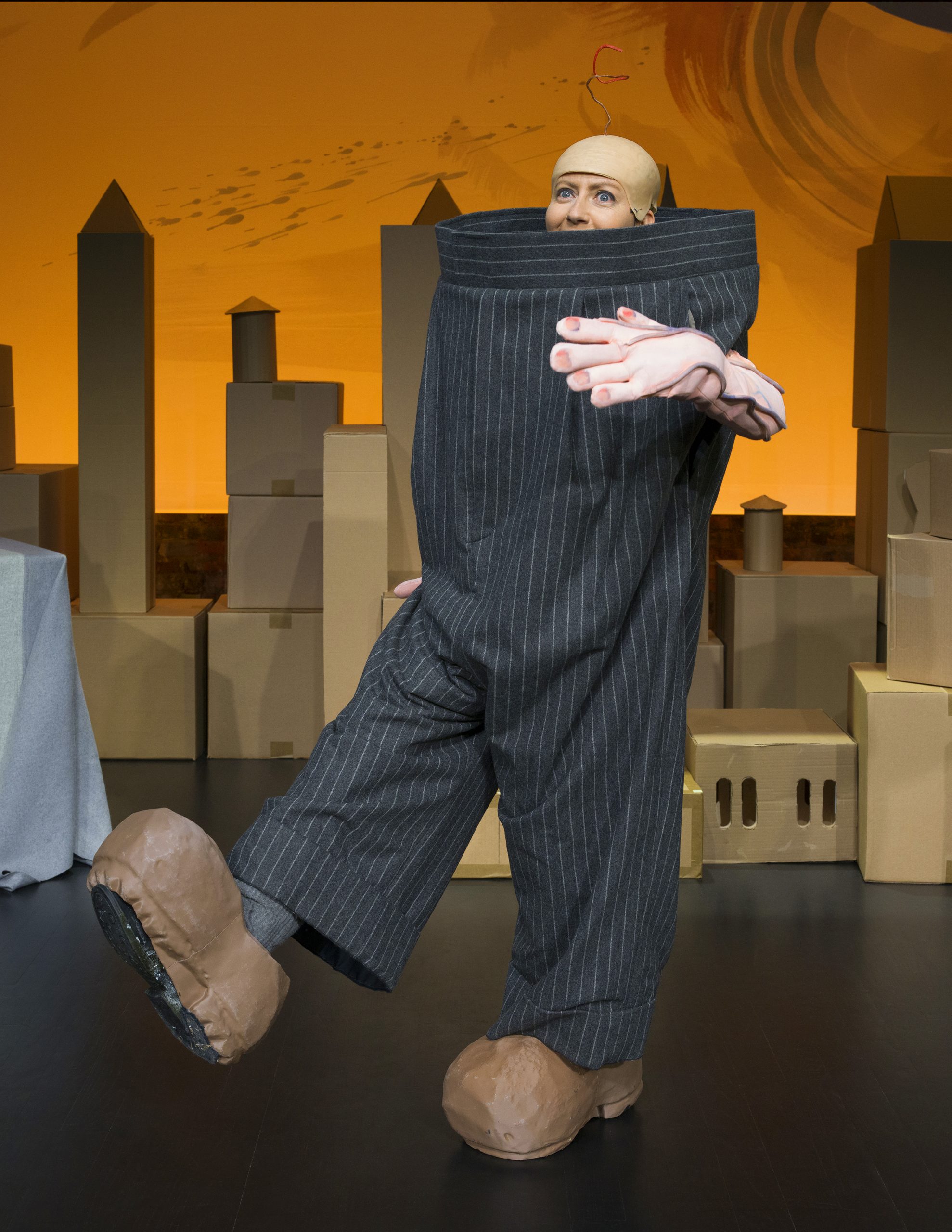
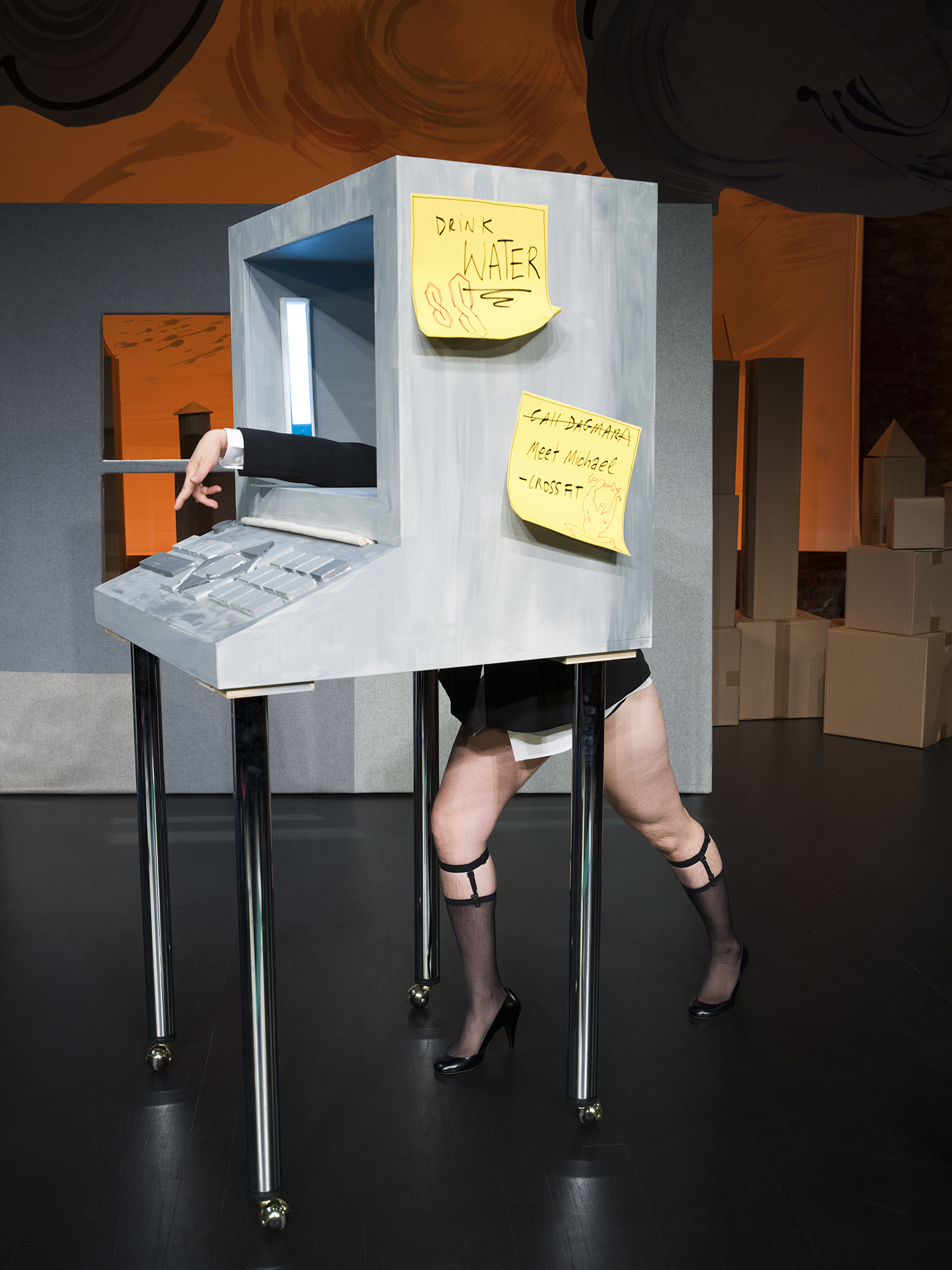
LW: I was also really struck by how Pantalone was executed so incredibly by Alex Tatarsky. And the way Sandra Berrebi created an enormous costume for them, with this one little squiggle of hair at the top, was incredible. The New York Times recently called the play “strange,” and that struck me as a very rudimentary way of approaching the work, particularly because the costumes and the play itself were informed by Dadaist theater and Surrealism.
EH: Absolutely.
LW: I was surprised by how little of that history seemed to enter into the discussion at the paper of record.
EH: Many readers found that piece of journalism quite reductive. In the end, it was more like a profile piece than a serious, critical engagement with the play. I was somewhat surprised by how much time we spent talking about socio-economic topics and wealth disparity that the article didn’t really unpack. At the end of the day, it goes like this: basic human needs like housing, healthcare, and education should not be the domain of the wealthy. And it is enduring economic precariousness that traps and subsumes the artist’s imagination. Dagmara, the artist-grasshopper, is the one being evicted. She can’t make rent, and she’s desperately trying to fend off Pantalone to keep her apartment. She eventually begins offering her body in lieu of payment, quite literally, taking off segments of her costume that constitute her arms and legs in miserable capitulation. She jams them into his giant pants against his lewd moans and groans.
LW: And she’s just waiting on a check to arrive. She’s already completed the gig.
EH: It’s debilitating. In the Times article’s caption, Camille is described as an artist that’s “apparently tireless.” I thought to myself, absolutely not. She’s an artist; she must be utterly exhausted. Surely. She has children just to start, and I have one in the back room even as we’re doing this interview. You’re juggling an inordinate number of projects, invoices, and responsibilities at once, all off the back of five hours’ sleep. To be so nonchalant about the near-religious artistic dedication to this several-years-long project is what’s “strange.”
LW: The restrained sexism of that piece is palpable. This is something we deal with in the art world in many different forms. Commedia dell’arte was one of the first theatrical forms in Western Europe in which women could perform professionally, even though they were still often confined to highly codified roles. It seems significant that you’re taking a form with such a complicated history around gender and using it to address very contemporary questions of identity, labor, and power. Was there anything about the history of gender in commedia dell’arte that you consciously brought into the work?
EH: I certainly feel that there was an emphasis on representation and total inclusivity.
LW: Camille, when we were chatting earlier you were telling me about this concept outlined by Sianne Ngai’s writing on the zany in her 2012 book Our Aesthetic Categories: Zany, Cute, Interesting. I feel it does apply here. You were saying that at first glance, zaniness looks like a pure symptom of late capitalism, with its pressure to keep performing and be endlessly productive. But if I understand correctly, Ngai argues that for all its spectacular, laborious exertion, zaniness is usually destructive, what she calls “the dramatization of an anarchic refusal to be productive.” I think of your Capitano character as a tech baron, which feels now like a very dangerous class of people, but in this situation it’s not really dealt with in camp. The zany can’t step back into ironic detachment. It’s stuck in the desperation and frenzy of the performer, in precarious situations. That feels so close to what these characters are doing: all this labor that is also a kind of refusal.
CH: I didn’t know the expression “baron,” but for me he’s a bit of a tech bro baby. There was even a moment where we had a teether in his mouth, and his costume has this giant zipper that looks like a baby’s. There’s something very childish about him. He feels the need to prove his autonomy a lot. My five-year-old, Sol, was immediately attracted to this character and asked, “Is he a baby?”
EH: Pierrot’s character is quite true to traditional form. He’s this very brilliant, funny delivery worker for UTI packet service, studying poetry at NYU. He’s just exceedingly intelligent, a musician, a philosopher, a humanitarian. And, like so many artists and musicians, he’s trying to make ends meet doing low-paid labor. He’s attempting over and over to deliver this package, and—
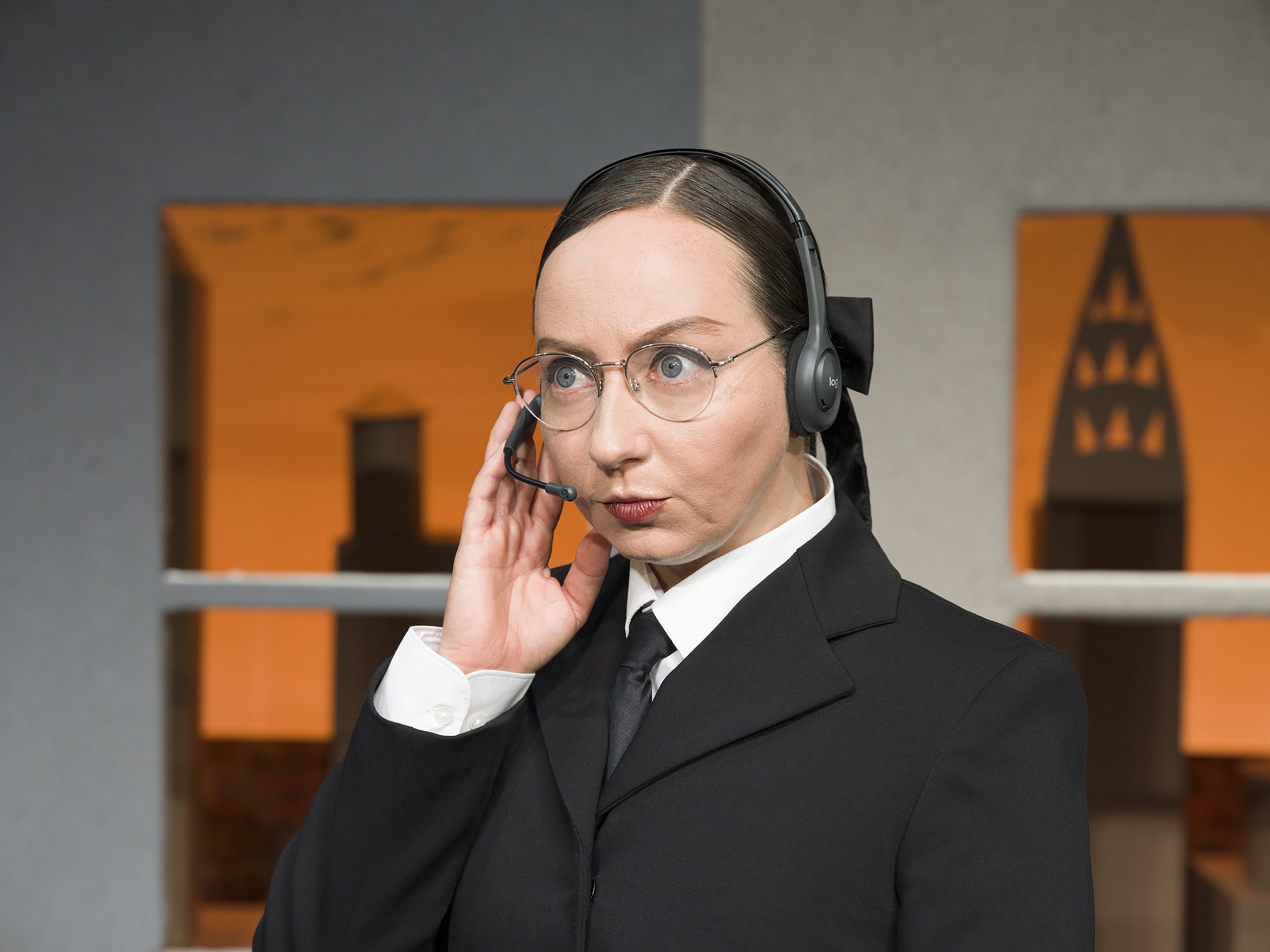
LW: He’s the ethical baseline that everybody else keeps returning to.
EH: That’s beautifully summarized. Pierrot is almost a Rorschach test, come to think of it. He’s the moral framework of the entire play. And there are so many spineless characters that inspire absolutely no pity from me.
CH: Pierrot is a model of how people should behave, of what a gentleman is. The Renaissance has an expression for the idea of how a nobleman is supposed to behave in society. And he speaks old-school English.
LW: I think the fact that Pierrot is the ethical backbone of the piece, while also being one of the smartest characters, is really important. He’s able to outsmart everyone and figure out how to make sure the rent is paid and Dagmara can stay in her apartment. It gives the play a very hopeful quality. You’re not putting the villain on a pedestal or making him secretly brilliant. The people with power are often the fools.
CH: That was something I thought about a lot. When you talk about a realistic problem that everybody knows about, that has been a problem for a long time, there’s always the option of transforming reality or just describing it, showing resignation, and hoping people will feel fear or rebellion. But we’ve already seen so many images of failure: failure of judgment, failure of justice, failure of balance, of harmony, and failure of society over these past three years. So I really wanted to end with something positive. But a positive ending in the setting we had already built could only be forced, a little bit like the Mary Poppins moment with the race on the carousel horses. It had to feel so magical and unrealistic that it’s almost painful.
I found a lot of inspiration, both for my 2017 Palais de Tokyo show and for this play in Ernst Bloch’s The Principle of Hope. There’s a need for hope; it’s almost like vitamin C. It’s energy, a basic substance for things to move. It starts with a wind of hope, and then it blows into a boat, and then the boat goes somewhere. And call me naive, as I’m not from here, but I do feel that in New York a lot is still possible. I see things changing really fast. We’ve elected Zohran Mamdani, who is such a different leader from anything we’ve ever had before as mayor of New York City, and he’s younger than me. His mom is a filmmaker, his wife is an artist. I feel like things can change really fast in New York. In the same way we have very changeable, unpredictable weather, society is in constant movement. The possibility for artists to survive, to fight back, to make fun, or to feel so much joy that they have resilience despite incredibly difficult circumstances rings true.
LW: I think that is closely related to the Dada influence. They were working against very extreme circumstances, and the political environment is what made them need to make things so extreme and so uncanny. There was no time for realism in their historical moment
CH: Yes. There’s also a French philosopher, Cynthia Fleury, who wrote a book about bitterness, Here Lies Bitterness (2023). It analyzes the rise of extremism, of the extreme right, and how it feeds on bitterness as an emotion. That book really encouraged me to make a happy ending. There’s a line of Pulcinella’s: “At least keep your spine neutral while you lose everything.” It’s the idea that there’s always a way up. She describes how, every time there’s a very, very difficult situation, writers, poets, and artists have always used comedy as a way out. To be honest, while I was making it, I thought it was very difficult and a crazy amount of work. But afterward, when I watched the audience and saw their reactions, saw them crying and laughing and being so happy when they exited the theater, I could feel that something was happening that was way beyond what an artwork can do. It had to do almost with a certain kind of relief, or an antidote to a moment.
LW: And then Dagmara says at the very end of the play, “Nobody works harder than a dreamer.”
Lyndsy Welgos is an artist, photographer, and the Executive Director of Topical Cream, a New York–based feminist arts organization founded in 2013. Dedicated to supporting women and gender-nonconforming contemporary artists, Topical Cream works at the intersection of publishing, programming, and education. Under Welgos’ leadership, the organization has become a leading force in redefining cultural value through feminist and intersectional critique. All photography by Lyndsy Welgos.
Director: Camille Henrot. Script: Camille Henrot, Estelle Hoy, and Justine Gelfman. Music composed and performed by: Mauro Hertig and Aaron David Ross. Set design: Adam Charlap Hyman (Charlap Hyman & Herrero), in collaboration with Camille Henrot.
Set design collaborators: Louisa Nolte, with Aydan Nova and Alexia Doan (Charlap Hyman & Herrero). Choreography and rehearsal direction: Sigrid Lauren.
Lighting design: Dan Stearns.
Costume design: Sandra Berrebi.
Make-up design: Ayami Nishimura.
Fashion stylist collaborator: Myssia Ghosn.
Movement research dancers: Liana Zhen-ai and Ragin Smith.
Cast: Samori Etienne, Maya Margarita, Christina Catherine Martinez, Bobbi Salvör Menuez, Isa Spector, Irina Varina, and Alex Tatarsky.
Production and Stage Management
Producers: Julia Simpson (Performa) and Eliza Ryan (Aspen Art Museum). Associate producer: Dria Brown. Stage manager: Philip Trevino. Technical consultants: Ryan Jenkins and Theresa Tomi Faison.
Henrot Studio
Studio Director: Léa Trudel. Studio Assistant and Scenic Production Coordinator: Morgan Connellee. Production Manager: Anna Cano Girones.
Fabrication and Wardrobe
Set and prop fabrication: SAFCORE, JoJo Li, and Camille Henrot Studio. Costume fabrication: Sandra Berrebi, Rae Swon, Tony Peto, Alder Beghma, Soven, Véronique Boisel, Loucas Chabot, Branica Sanadrovic, Martha Grauer, Anna L’Hostis, Pénélope Diehl, and Mylo Coustures. Wardrobe assistants: Kate Williams, Zo Roze, and Kayleigh Snowden.
Commedia dell’arte by Camille Henrot was
Co-commissioned by Performa, Aspen Art Museum / Wheeler Opera House, and LYRA Art Foundation.
The commissioning of Commedia dell’arte was initiated in 2023 by RoseLee Goldberg, founding Director and Chief Curator of Performa.
Commedia dell’arte is curated by Goldberg and Eliza Ryan, Curator at Large, Aspen Art Museum.