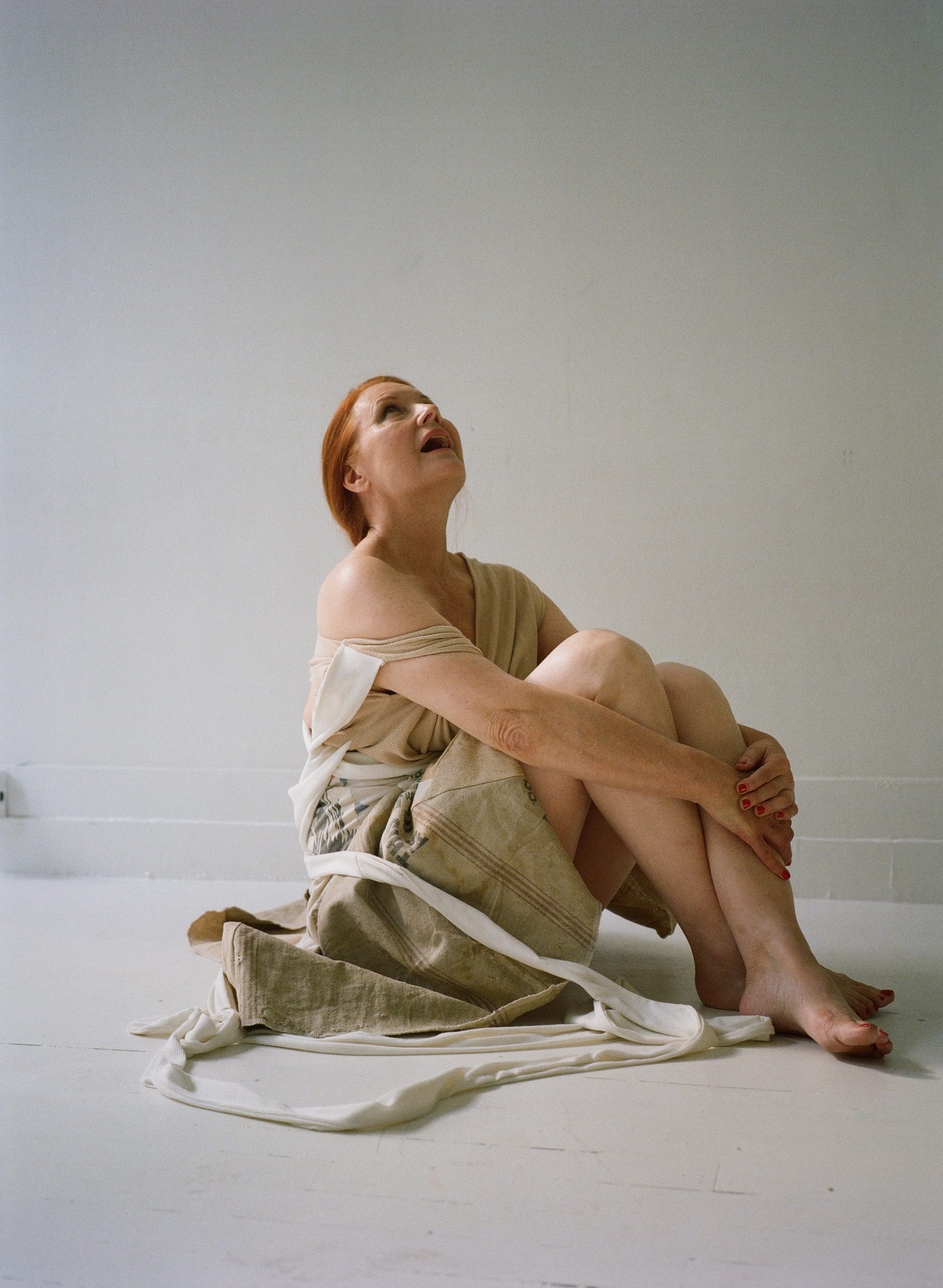
A Call to Radical Imagination: Karen Finley in Conversation with May Makki
In May Makki’s potent interview with Karen Finley, the iconic performance artist resists typical art media demands for explanation by shifting the conversation away from her own infamous experience of censorship and toward today’s ongoing crises of government interference, as well as what it means to claim oneself as an “American” artist. Recognizing the privileges of her “normative” position within her artistic community, she examines the evolving concepts of support and the collective as sites where sociopolitical dynamics are staked, and where intimate relationships are reshaped and recalled. A dedicated educator, she crucially finds home in her students
and the potential for shaping imagination through performance.
– Lumi Tan, 2025 EIR
May Makki: Karen, it’s such an honor to speak to you. I know we are only just meeting today, but you’ve been on mind a lot lately, for a few different reasons. Most of all, I’ve been thinking about the cycles of change, of reaction and counterreaction, that we move through. It seems we are currently in a moment of counterreaction, echoing the late ’80s and early ’90s.
Part of me feels the urge to historicize you within that period. On the other hand, I’m wary of simplifying too much. Your work defies expectations on so many fronts, like gender, race, and even national identity. Maybe we can begin this interview by tying that into your own narrative.
Karen Finley: I’ve been reflecting deeply on how we tell our narrative or story. In my case, with the 1998 NEA Four Supreme Court ruling (NEA vs Finley) and the overall censorship issues that come with just being a woman and having a woman’s body, I felt I always had to be apologizing, verifying, justifying, explaining. I worry that in trying to explain myself, we’re just fixating on expectations that disappoint—my body, sexuality, or how I’ve been censored. My story becomes a victim narrative, my retelling becomes a troubled manipulated gaze. That’s the case for many people who are othered or marginalized outside the dominant power structure. There’s an emphasis to create a tragic artist figure and a price to pay for radical imagination.
I have experienced some people coaxing me to talk about how I was mistreated, and I’m supposed to say, “Oh yes, this was taken away. That was taken away. I haven’t had these opportunities.” It’s true, I did not have the same opportunities as a white man, but I also had privileges as a straight, white woman. So that’s one thing I’m cautious about. The other is that I worry that this imposed victim narrative frames the artist as dangerous, with experiences to be avoided, instead of focusing on the artwork they’re making, and creativity as cultural activism that changes society.
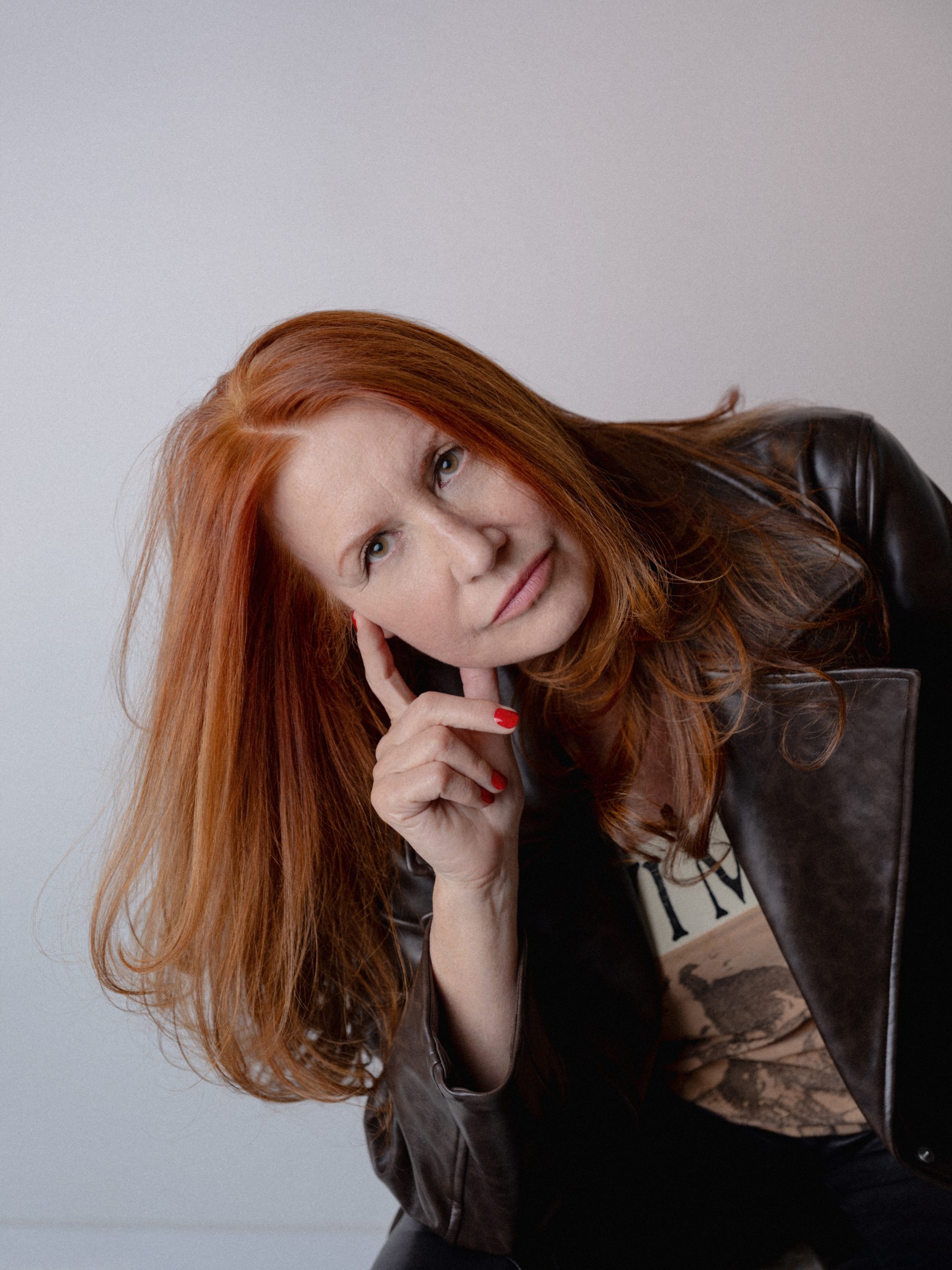
“I felt I always had to be apologizing, verifying, justifying, explaining. I worry that in trying to explain myself, we’re just fixating on expectations that disappoint—my body, sexuality, or how I’ve been censored. My story becomes a victim narrative, my retelling becomes a troubled manipulated gaze.”
I first encountered your work as a university student. In 2015, Shock Treatment had just been re-released, and I devoured it over the summer break after stumbling upon it at City Lights bookstore. In the fall, I enrolled in the late conceptual and performance artist William Pope.L’s course “Writing for Performance” at the University of Chicago. We studied the performances anthologized in that text and were asked to create our own. One of Pope.L’s main points was that in writing and performance, there should always be something that doesn’t fit, but that you know has to be there.
It puts tears in my eyes when you bring up Pope.L. We were supporters of each other when the performance world was a very small community. We understood each other’s work. When we’d get together, we wouldn’t always talk shop, we’d talk about life. I’m glad that my work somehow inspired you with him as a teacher. We were both educators, and pedagogy was an important part of our practice.
Support has been a “hot” topic for me lately. Back in 2022, I made a performance for the Just Above Midtown exhibition at MoMA.1 The piece I created was about our unique living arrangement in a very large inexpensive Tribeca loft, where we were roommates with the late choreographer and artist Fred Holland. We each exhibited there and he performed at Just Above Midtown multiple times. Just Above Midtown was the first space in NYC to screen my early video work from my student years, while Fred had an ongoing involvement with the gallery.
My performance in the MoMA show was an homage to Fred. I made a series of memory paintings, drawings, photos that were projected onstage behind me as I told the intimate story of our development as artists living together. Developing the performance made me realize, even though we weren’t creating work together directly, we were sleeping in the same house, breathing the same air, pooping in the same toilet, using the same laundry. There’s tenderness and intimacy. It made me go back and think about all the different people who came through our studio, and all the support I’ve had in my life. Support can happen in ways that aren’t grand. It can be in the classroom, or through a teacher, a neighbor, even a painting or artist that has made an impact on you. I decided I was going to make an artwork called Believe (2024) that speaks to the many people who have supported me in my life. I didn’t have to show my wounds to them, to verify, justify, explain. I was just believed. Instead of focusing on victimhood, or censorship, or lack of support, I wanted to show the support people give each other in different meaningful and profound ways. Some of the people I pay homage to, whom I have been privileged to know, are Louise Bourgeois, Linda Montano, Hannah Wilke, Danitra Vance, Kathy Acker, Sinead O’Connor, among others.
It’s interesting to hear you talk about this intentional shift away from narratives of victimhood. It’s making me think about other shifts in your work. I’m especially curious about how you’ve embodied the voice of the perpetrator in iconic works like We Keep Our Victims Ready (1990). In more recent works like Grabbing Pussy (OR Books, 2018), I notice that you still use that voice, but also condemn the aggressor more explicitly. Now, having heard you reflect on how your narrative has been interpreted, sometimes against your intention, I feel compelled to ask: do you see that progression as related?
I don’t see it as a binary, but rather something I’m always playing with. There is a tension in how the point of view shifts. In my performances, I take on many voices. Sometimes I’m expressing rage, sometimes I’m expressing pain, sometimes I’m expressing the attack. It’s interesting to think about when to use what voice, and when to take on the position of being the “I” and the perpetrator.
At other times, it’s important to create spaces of restoration or activation. In my Memento Mori (1992–ongoing) installations for AIDS, women, and queer rights activism, I was interested in creating an inclusive space for other people’s voices and emotions, especially at a time when there wasn’t a place to grieve or mourn. One piece was Ribbon Gate (1992–ongoing), which was a public ritual where people tied ribbons in memory of someone who died of AIDS. Another was Carnation Wall (c. 1990s), where visitors were asked to weave red carnations into floor-length lace panels. The flowers would dry, leaving blood splatter impressions over multiple layers of draperies. There was also Written In Sand (1992–ongoing), where visitors would write the name of someone they loved and lost in sand. Even The Black Sheep (1990), which was part of the performance We Keep Our Victims Ready and cited for the denial of my NEA grant, is a prayer to those lost to AIDS and those living outside mainstream society. So, I see my concern for “the other” as motivating these different approaches and inclusivity.
For those unfamiliar, the NEA Four controversy refers to your experience having your NEA grant revoked in 1990 alongside artists Holly Hughes, John Fleck, and Tim Miller, because your work was determined to violate Congress’s recently passed decency clause. You argued that the language in the clause was vague. While you won damages for the grant amount, the Supreme Court ultimately upheld the constitutionality of the clause.
I was recently rewatching different interviews you did at that time. In defense, you asserted yourself as an “American artist.” Sometimes this evocation felt very technical, pointing to the U.S. Constitution as grounding your defense of free speech and your work. But sometimes I thought it was more performative, somehow intended to expose the contradictions of American values. What does that identity mean to you?
Some of these interviews are from thirty-five years ago. Remember, the world was very different then, especially for women. When my grandmother was born, she did not have the right to vote until 1920—and when I was born, a woman couldn’t obtain her own credit card until 1974, or contraception if she wasn’t married, until 1972. Women could be fired or not hired for being pregnant, or for being ten pounds over a certain weight. We were expected to be quiet, and our emotions were seen as interfering with our reasoning. I had to emphasize and remind listeners that I am American, claiming my First Amendment rights, because women have long been treated as second-class citizens, and we still do not have an Equal Rights Amendment.
I was constantly being called un-American. Artists were also seen as being outside citizenship. During the McCarthy era, accusing an artist or someone else of being un-American was an effective strategy for censorship. So, I decided to reverse that and call myself an “American artist.” I was building on the historical memory of the Red Scare as a warning. But it was also about the importance of expanding access to cultural expression through public funding for the arts, and showing awareness that offensive speech is protected by the First Amendment. No other country has this exact protection. I have faced censorship in other countries, too, but tolerating and creating offensive art or speech you disagree with, to me, is American.
“I have faced censorship in other countries, too, but tolerating and creating offensive art or speech you disagree with, to me, is American.”
As a young artist suing the government at the level of the Supreme Court, yes, it was important for me to stress, “I’m an American artist. Freedom of Speech, even offensive speech, is my right.” The First Amendment, with all its problems, is something I still feel strongly about. I was perhaps more idealistic then—we ultimately lost the case. Yet, social change took place nevertheless.
The issue feels just as relevant now, as we face a First Amendment crisis. The NEA’s removal of support for PBS and the takeover of the Smithsonian and the Kennedy Center have had a devastating impact on political speech. Or look at the censorship of Palestinian artists and artists speaking out on their behalf. Look at Jimmy Kimmel: he’s a white man in a very privileged position, but he was taken off the air for comments he made about Charlie Kirk that went against the current government’s agenda. And now Bad Bunny is being attacked for being “un-American” after he was selected to perform during the Super Bowl.
As time moves on and people evolve, the way we negotiate with the media changes as well. I do feel that a lot of the things that I’ve said earlier in an artistic context could be problematic now. Something that I wouldn’t do today, let’s say, is speak on behalf of gay or queer artists. The other NEA artists who didn’t receive the grants—Holly Hughes, Tim Miller, and John Fleck—were lesbian, queer, and gay. I had my daughter during the lawsuit, and sometimes I would be promoted as the “normal” one, because I was heterosexual and a mother, as a way to try to temper the controversy. “Oh, look, she does this on stage, but look, she’s just like us: she’s a mom.” I had the safety to take on a certain political content as a proxy for others when they couldn’t safely speak. But they should be speaking for themselves; I can still be a supportive ally.
Now, with violent attacks on immigration by ICE, I might select different terminology than “American” to make my point. But at that time, I believed there was a more generous spirit around immigration and U.S. citizenship. You have to understand that I was concerned with losing mine—I thought that I would have to enter exile in order to create.
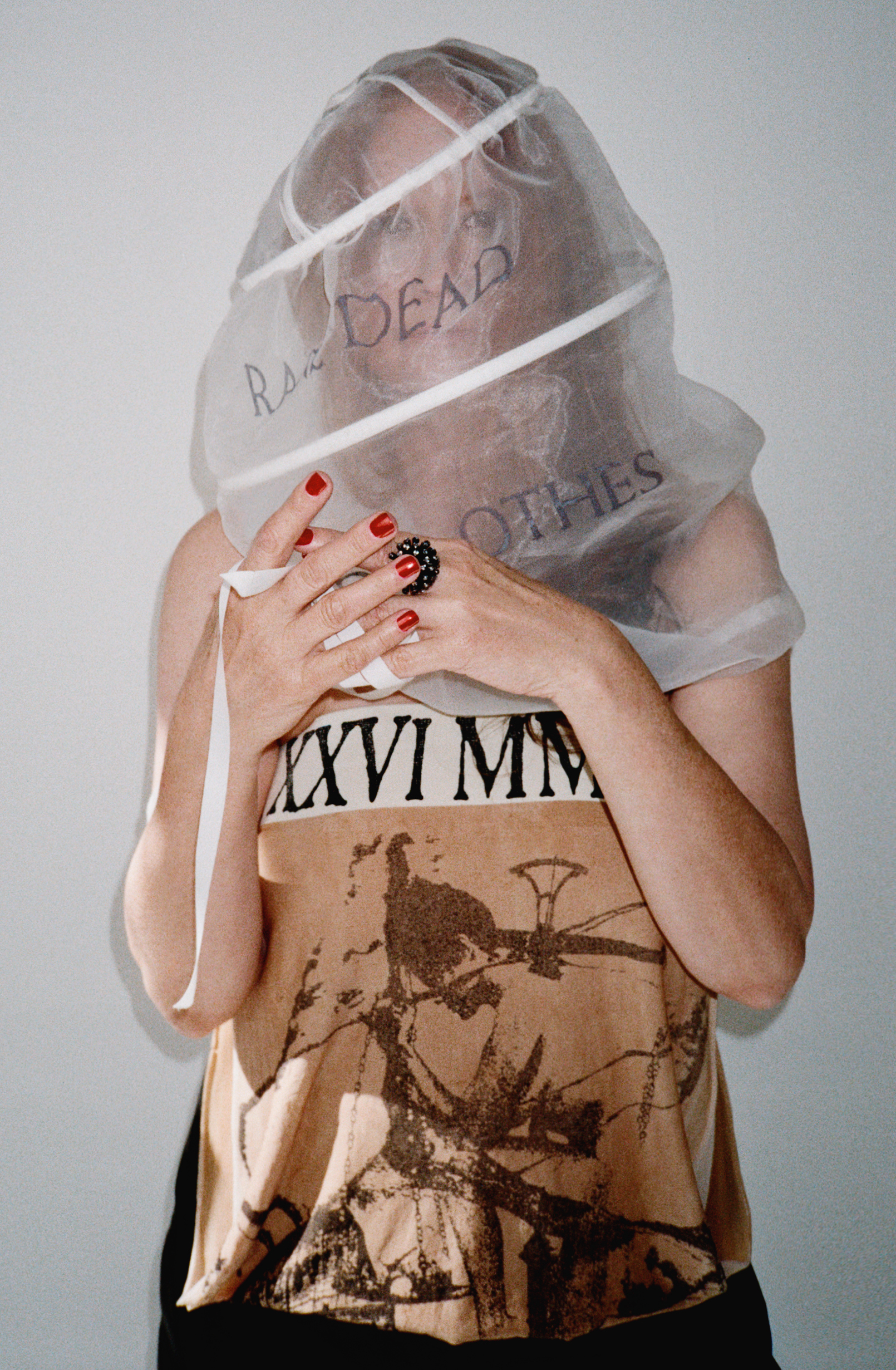
How do these reflections shape the work you’re making today?
I’m an older woman now. It was very different when I was making art in my twenties and thirties. I wasn’t taken seriously, and my body was seen as just an object of desire. Because I had a femme face and body, I was expected to represent the ingénue. I anticipated and manipulated that response. My work was a refusal of the expectation of young femme whiteness, submission to the male gaze, sexual violence, and desire on demand. Now I face different expectations, not because of my body, but because of my story as Karen Finley, and the weight of that. In my current work, I take extra care to zoom out to the collective. For instance, I’m interested in restaging a recent painting, Disappeared Words: a memorial (2025), shown at Freight + Volume, which compiles a list of 373 words and phrases that the Trump administration has highlighted as unacceptable for use in federal documents, websites, court orders, or educational curricula. The painted mural list also includes words that would flag grant applications as running counter to the current administration’s executive orders—words such as “Belonging,” “Women,” and “Identity.” I would like to invite poets, writers, and students to create their own work in response. I’m interested in how to keep activating, to open the space for others, to create a kind of community space.
For me, that focus on relationships and community feels connected to your historic rejection of systems of value and economy in the arts. How do you see it?
I first began creating performance during the post-Vietnam War era. Public funding for the arts was emerging in ways that did not happen before on this scale. The G.I. Bill and Pell and NEA Grants expanded who could study or who could be in the arts. Multiple cultural expressions could be publicly supported, beyond those having inherited wealth.
Yet, hierarchies still existed in other ways. Museums defined systems of value by leveraging distinctions between craft and outsider art on the one hand, and fine art born from European traditions and American innovations on the other. For me, making performance was a way to go against the art market, against galleries and collecting, because there was no object in a traditional sense. Yes, I know that people now find ways to monetize performance. But the emphasis early on was to disrupt the economic institutionalization and manipulation of art. Performance can go in a museum, but it also happens in clubs and other spaces. It wasn’t just me thinking this way—it was a generational move, a post-Vietnam experiential response to art ownership under American capitalism.
I’d like to hear more about the role of disco and clubs in your work. In the ’80s, I imagine them as a model of social progress—spaces that were mixed across class and race lines. Going back to the idea of reaction and counterreaction, the dancefloor as a shared space was another target of the conservative backlash you experienced. Can you talk more about how you experienced it?
I started going to dance clubs as a teen in Chicago. My first club was the infamous gay club Dugan’s Bistro. I worked at discos in the ’70s, but when I went to art school in San Francisco, it was more about punk clubs. I started performing at punk clubs alongside bands and worked with other art students at a burlesque house, which is a form of a club, combining a stage and music with nudity. It was only when I moved to New York in 1984 and began working in dance and disco clubs that I experienced dancefloors that were more mixed, racially and by class. I looked at the dancefloor as a space of connection. It’s where influences can be found and where I began to perform. I wasn’t finding museum spaces to be as meaningful to me at that time.
“Performance can go in a museum, but it also happens in clubs and other spaces. It wasn’t just me thinking this way—it was a generational move, a post-Vietnam experiential response to art ownership under American capitalism.”
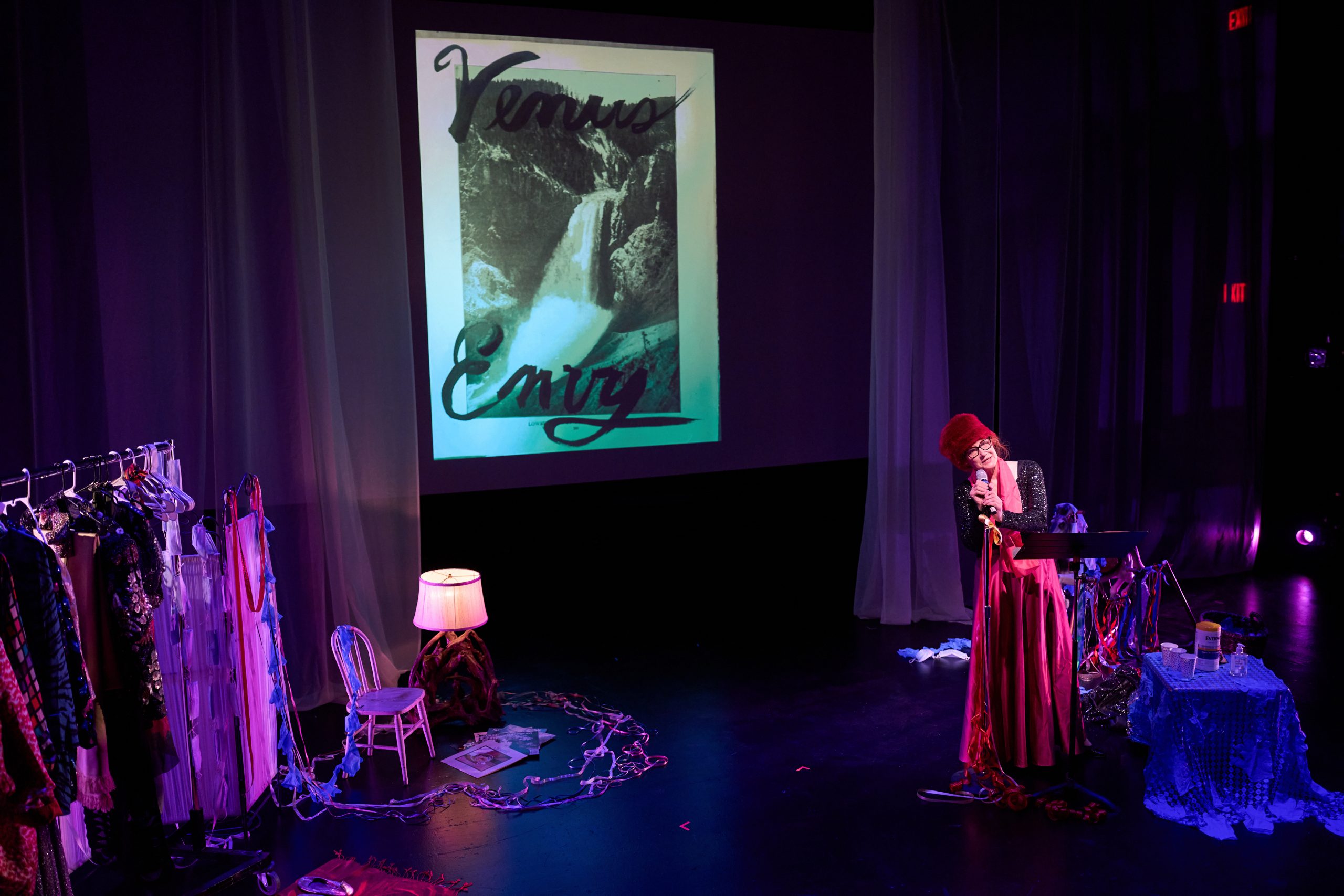
How about now, do you still go out dancing? Does that kind of dance floor still exist?
In my recent performance and book, COVID Vortex Anxiety Opera Kitty Kaleidoscope Disco (2025), I have a scene where I am dancing alone on a Zoom screen with ’70s disco floors, pre-AIDS. I still like to dance, I think it’s important. It’s what I love about performance, and what I loved about the clubs.
To dance and be within your body and be with people is imperative. You’re in a room bringing people together. Today the idea of audience and physicality has changed, because everyone is on their screens. But at the same time, the Internet, social media, and algorithms enable extraordinary research. I was just listening to Zohran Mamdani speak on Instagram and he says, you know, you have to celebrate the struggle and the celebration. That’s the dichotomy: where do we hold that space of humanity within ourselves? And that’s also related to the idea of disrupting a narrative. How do you find that humanity, and how do we express and share our humanity during these difficult times?
It’s interesting that you mention Zohran. It brings us to the present moment, and especially within my generation, to this glimmer of energy and hope amid nihilism. I feel that nihilism dominates so much of the conversation within my generation and the work we’re making. But there’s also this element of possibility, or a sense that things will radically change soon. Do you see that element in performance today, or among your students?
With my students, I’m seeing hope. I don’t just teach performance, I teach about creativity, art, and public policy. People come to my classroom hoping their work is going to make a difference. They come to reimagine.
I think the idea of nihilism can be reframed as a search for meaning. There are many cultural movements that are considered “nihilist” because their core concern isn’t obviously legible. We ask ourselves: What the hell does it mean? What’s going on here? Someone might say that of cultural movements in music, such as Jazz or Rock. “I can’t make it out, they’re just making a lot of noise.” The output can look meaningless at first, but it’s actually quite profound. Abstraction often speaks indirectly to trauma. Or Surrealism, that was a response to the destruction of World War I. Even art made under Nazi Germany records hope that the future will change for the better. Nihilism can be a kind of protection. You say you’re removing yourself, it doesn’t matter, only because it actually matters too much. So it’s worth looking at and spending time to see what’s going on beneath the surface, and why people are feeling this way. There is usually a good reason. I have hope and confidence in radical imagination in the next generation.
May Makki is a curator and writer working across contemporary art and performance. Her ongoing research considers the infrastructural possibilities of exhibition-making, with a focus on the communities, economies, and technologies that develop alongside works of art. She has organized exhibitions and programs at venues including the Museum of Modern Art, Abrons Arts Center, and Millennium Film Workshop, and recently co-curated the third Diriyah Contemporary Art Biennale (2026).
NOTES
[1] Curated by T. Jean Lax with Lilia Rocio Taboada, the exhibition Just Above Midtown: Changing Spaces (Oct 9, 2022–Feb 18, 2023) examined the legacy and spirit of Linda Goode Bryant’s gallery and performance space (active 1974–1989), which played a historic role in supporting African American artists and artists of color.